
BodyBalanceCheck Advanced (TS-A)
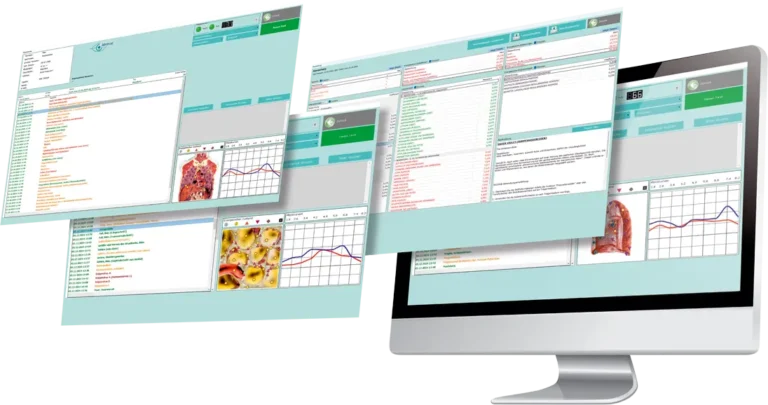
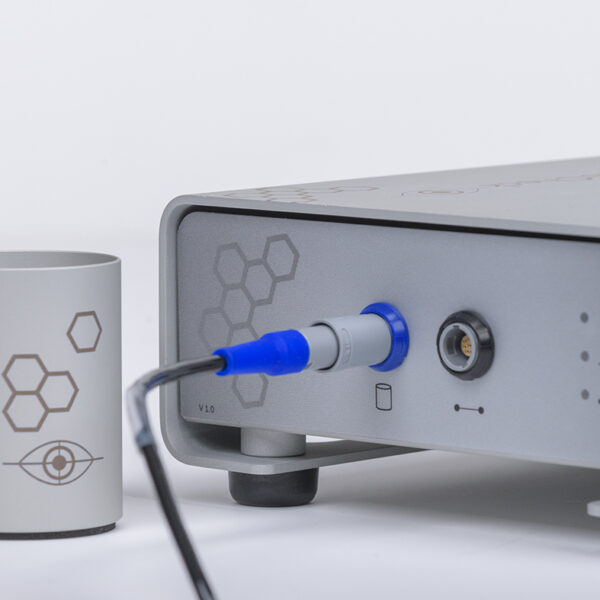
BodyBalanceCheck Advanced with trigger sensor type A. Everything in Standard, plus a scan image library of more than 1,050 sorted into organ systems, in-depth measurement to cell level, detail per individual scan image, analysis by system groups, psychological and emotional interpretation, combined etalon transfer, external substance testing, the group list and etalon register, the external vegetotest, and automatic energy harmonisation. Hardware is identical across all three versions, with the licence setting the level.
Price on application
Tell us what you need and we will come back to you with a written quotation. A demonstration can be arranged.
How the three versions compare
| Feature | Standard | Advanced | Advanced Plus |
|---|---|---|---|
| Quickscan for a fast overview | ✓ | ✓ | ✓ |
| Automatic scan profiles: Express, Normal, Detailed | ✓ | ✓ | ✓ |
| Create your own scan profiles | ✓ | ✓ | ✓ |
| Graphical display via entropy points and curves | ✓ | ✓ | ✓ |
| Automatic overall evaluation of the scan | ✓ | ✓ | ✓ |
| Evaluation of areas, dysbalances, stresses and support across the whole scan | ✓ | ✓ | ✓ |
| Evaluation of recommended foods and foods to avoid | ✓ | ✓ | ✓ |
| Customisable final reports to print | ✓ | ✓ | ✓ |
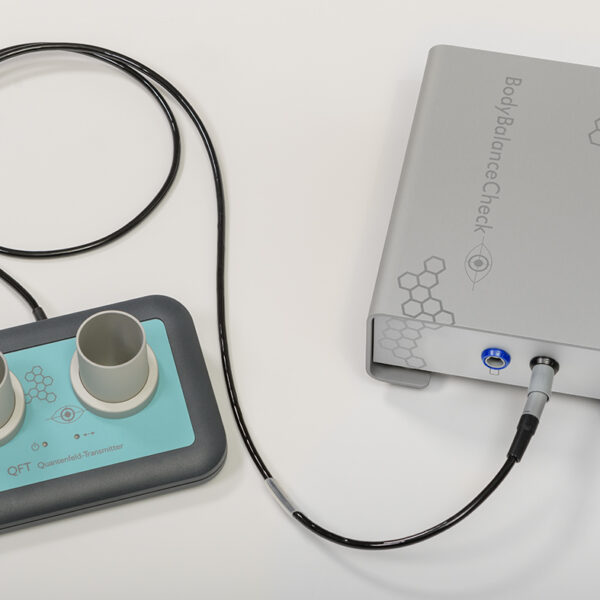
| Transfer of individual etalons to substance carriers | ✓ | ✓ | ✓ |
| Scan images available | about 100 | more than 1,050 | more than 1,050 |
| Extended scan selection by organ system | – | ✓ | ✓ |
| In-depth measurement to cell level from the measured scan images | – | ✓ | ✓ |
| Detail of areas, dysbalances, stresses and support per scan image | – | ✓ | ✓ |
| Detailed scan image analysis by system groups | – | ✓ | ✓ |
| Psychological and emotional aspects of scan image interpretation | – | ✓ | ✓ |
| Transfer of several etalons in combination to substance carriers | – | ✓ | ✓ |
| Testing external substances | – | ✓ | ✓ |
| Automatic energy harmonisation, whole scan or individual images | – | ✓ | ✓ |
| Group list and etalon register | – | ✓ | ✓ |
| External vegetotest | – | ✓ | ✓ |
| Offline stick: view data and client records on any Windows 11 computer, with no control unit or sensor connected | – | – | ✓ |
| Restructured group list, collapsible to six main groups | – | – | ✓ |
| Harmonisation repeat count, for example repeating until every entropy value is 2 or better | – | – | ✓ |
| Vegetarian and vegan filter on the food evaluation | – | – | ✓ |
| Export to BICOMmultisoft® Pilot | – | – | ✓ |
The hardware is identical across all three. The version is set by the software licence, and Regumed allow an upgrade at any time.
What Advanced adds over Standard
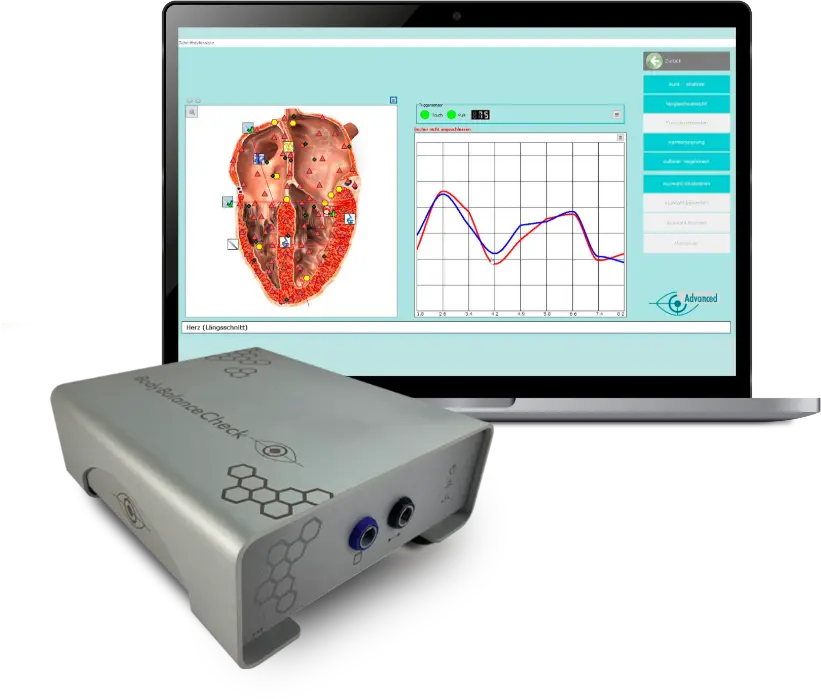
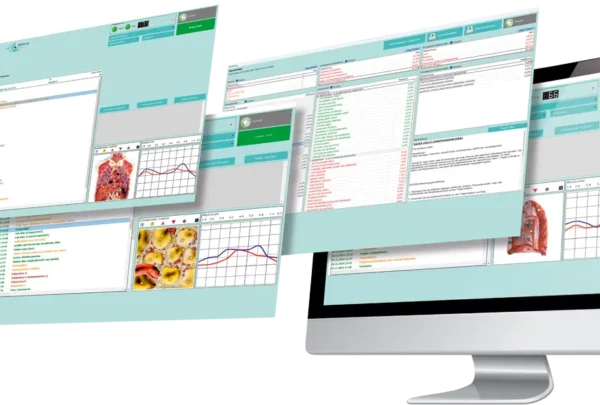
The scan image library goes from about 100 to more than 1,050, and those images are sorted into organ system groups so they can be selected directly. Advanced also opens up measurement to cell level from the measured images, detail per individual scan image, analysis by system groups, the psychological and emotional side of scan image interpretation, combining several etalons onto a substance carrier, testing external substances, the group list and etalon register, the external vegetotest, and automatic energy harmonisation across the whole scan or a single image.
Training for this system
Two online courses for practitioners, free with Practitioner Library membership. Both are self-paced and assessed, and you can take them before you buy anything.
Membership is free to practitioners working with BICOM equipment and also opens 385 congress papers. Practitioner Membership.
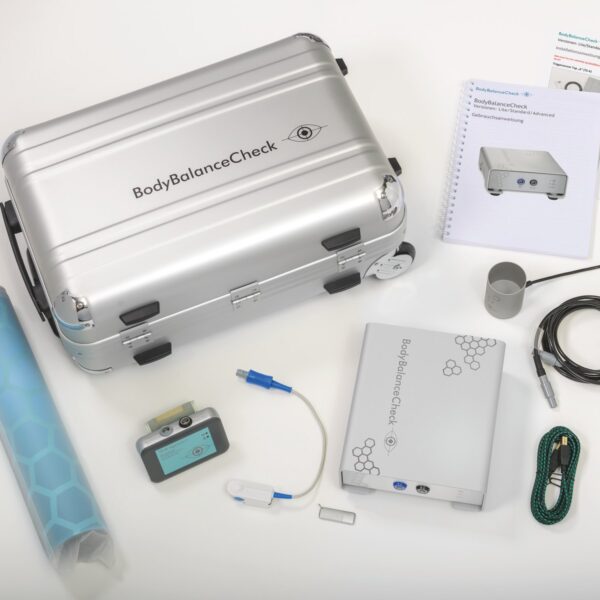
What is in the case
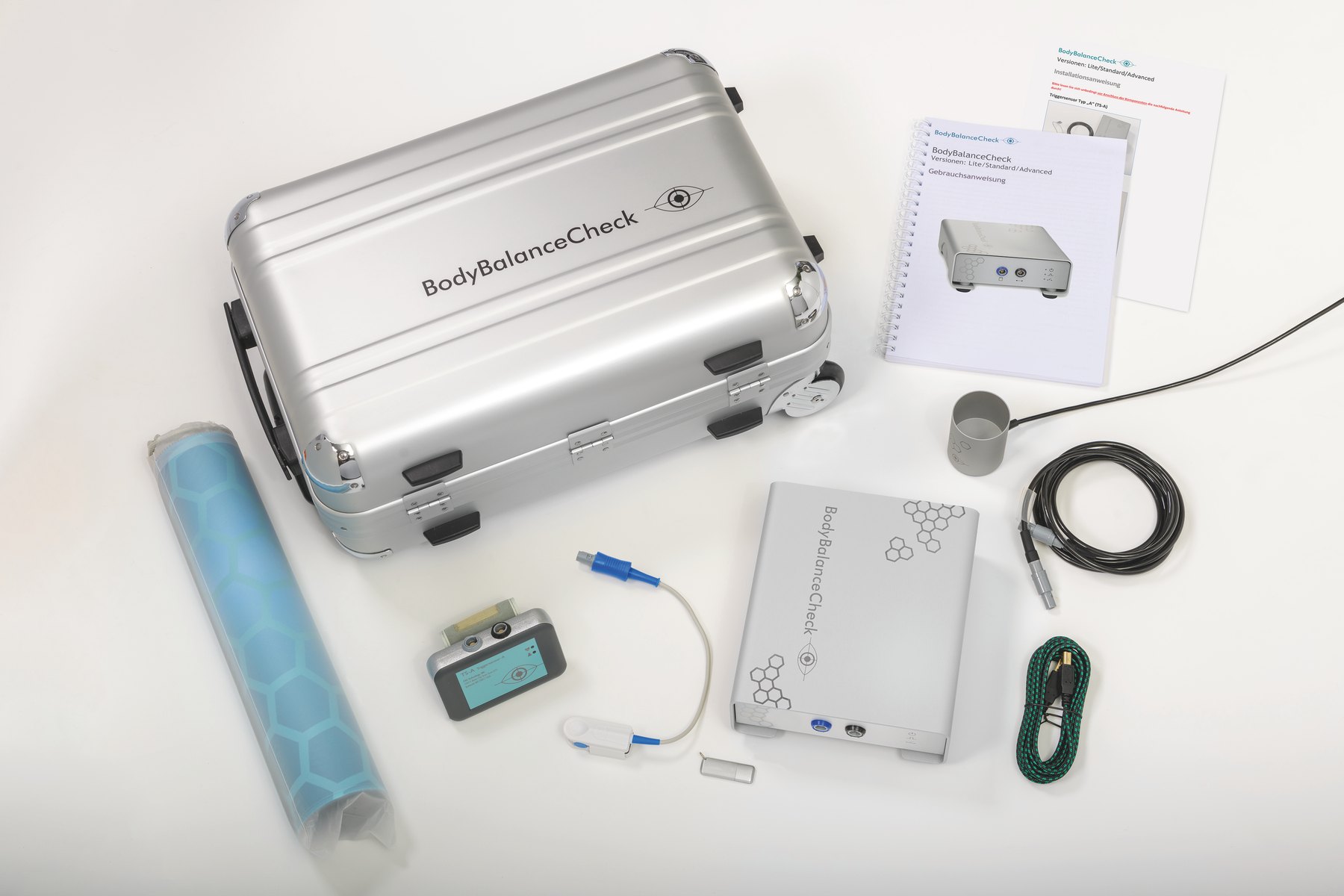
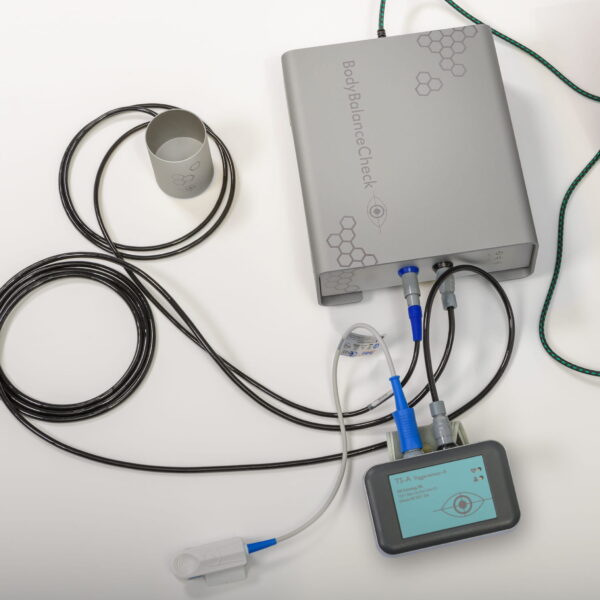
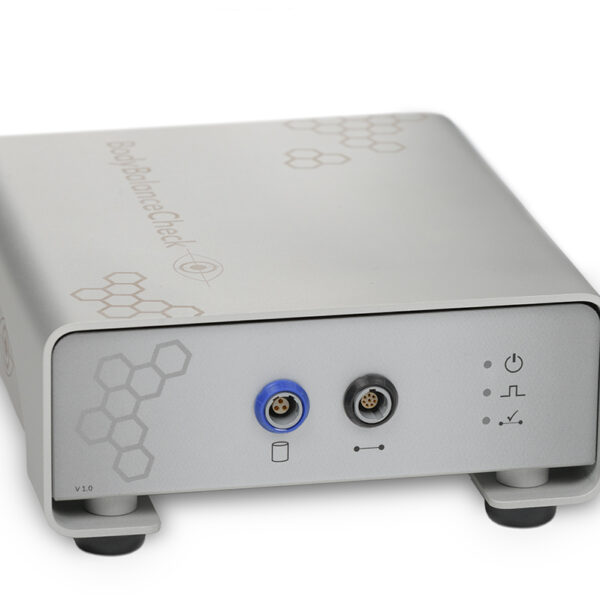
- BBC control unit
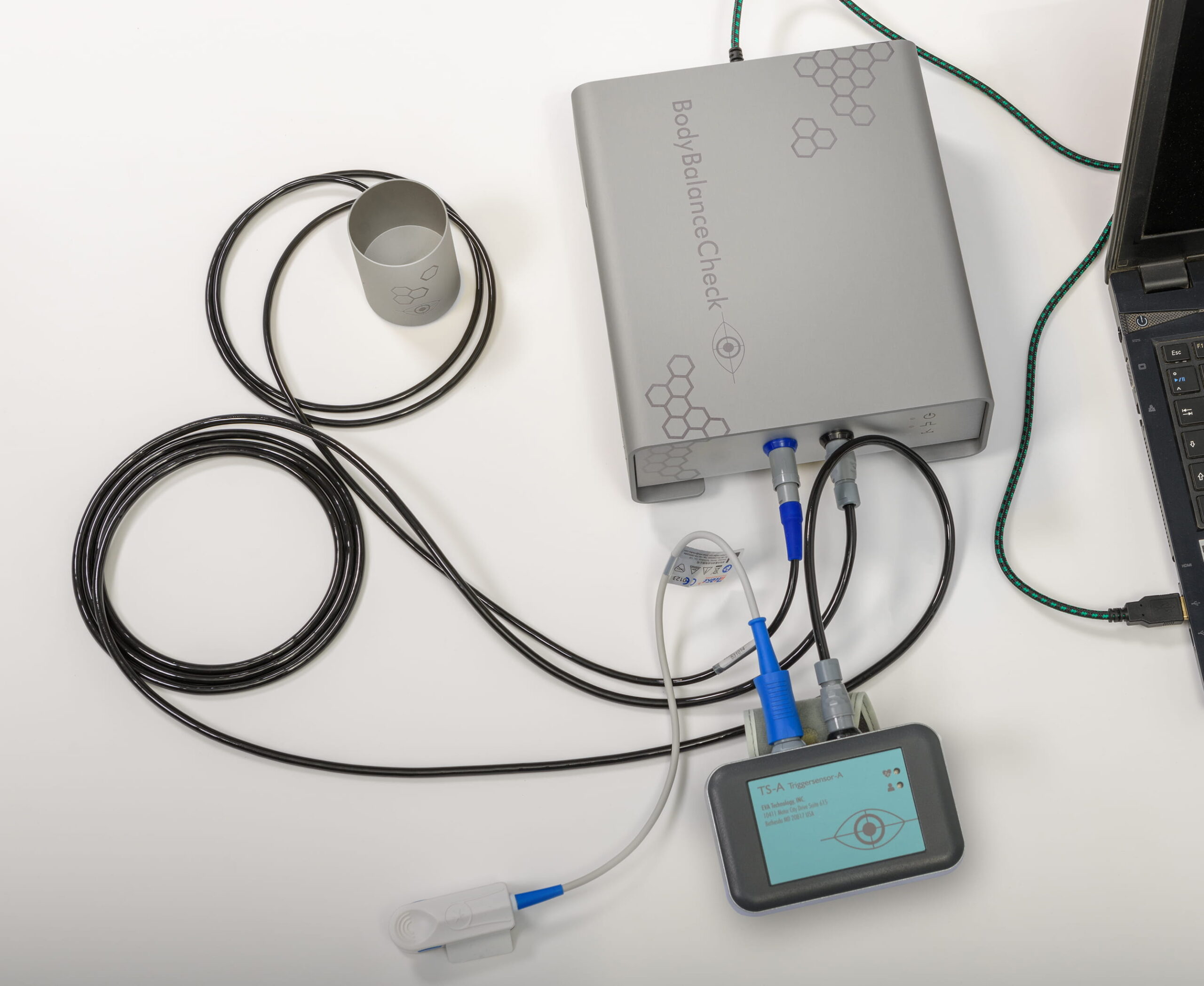
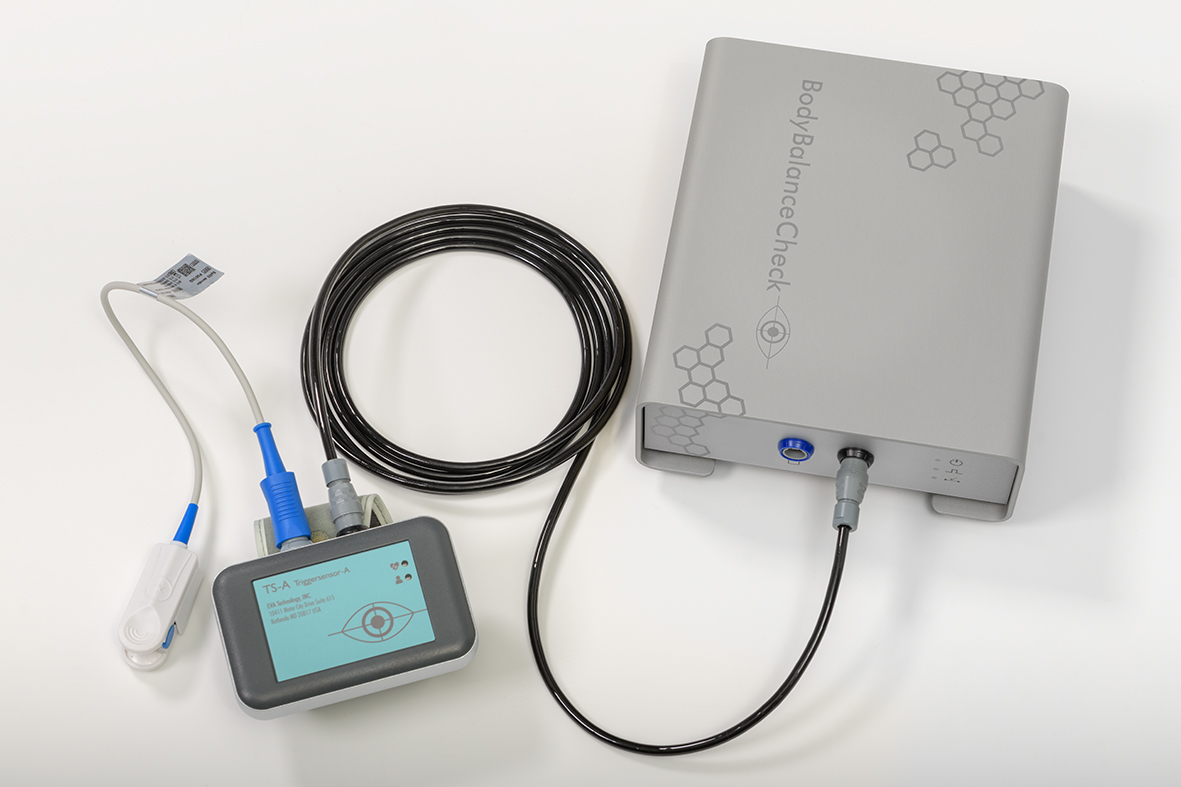
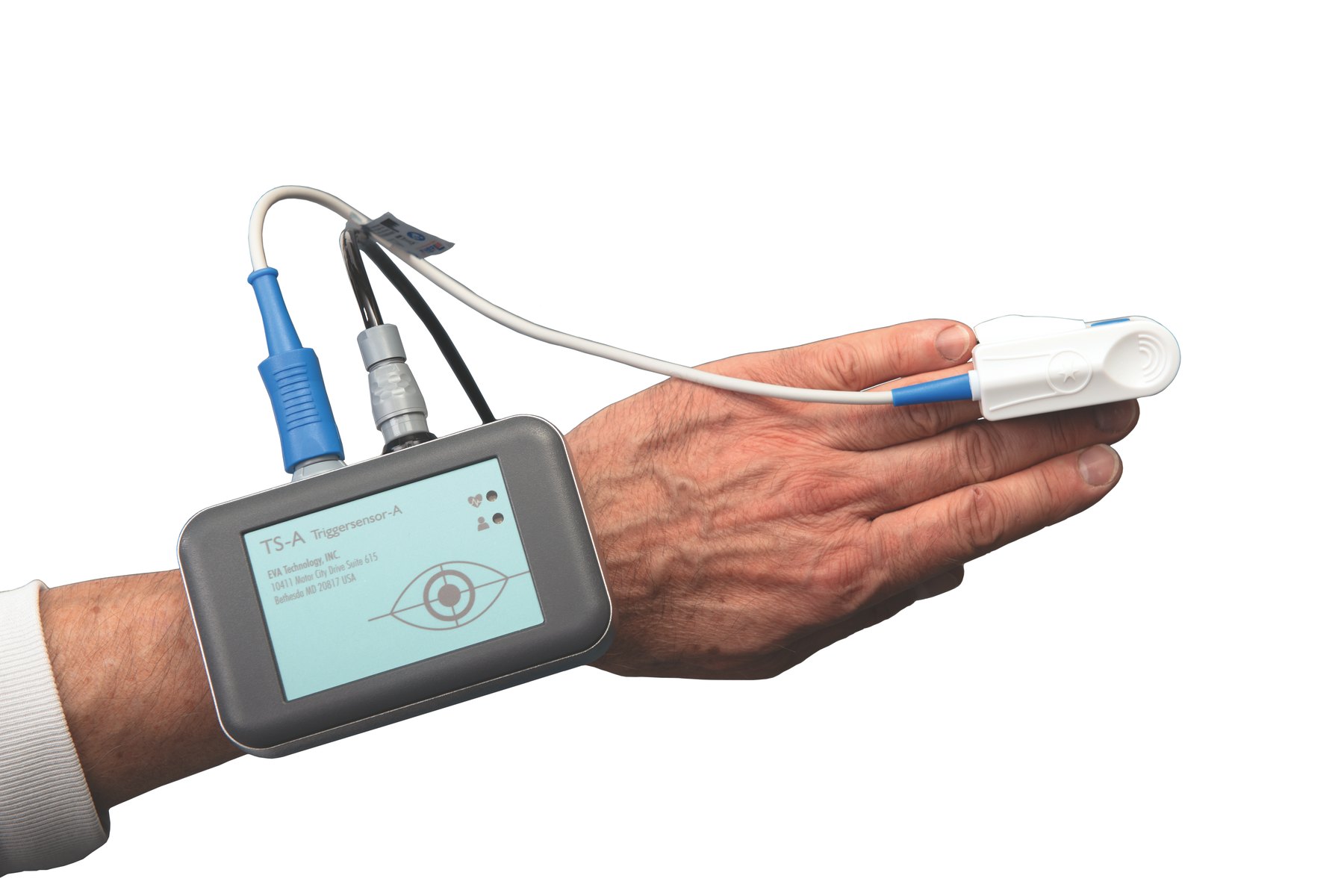
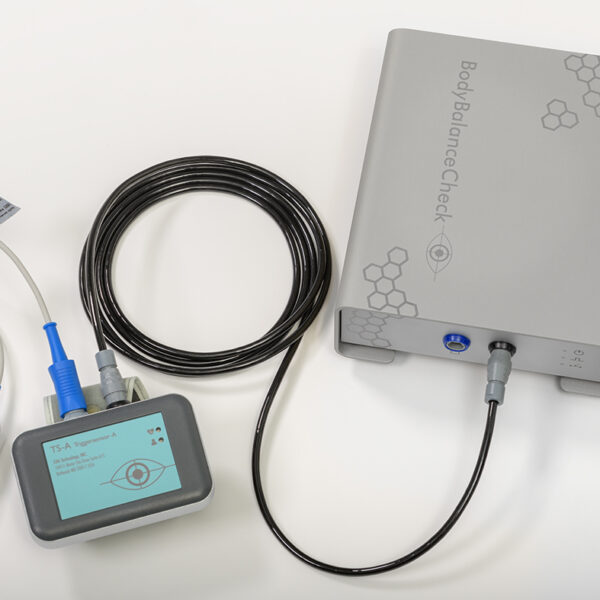
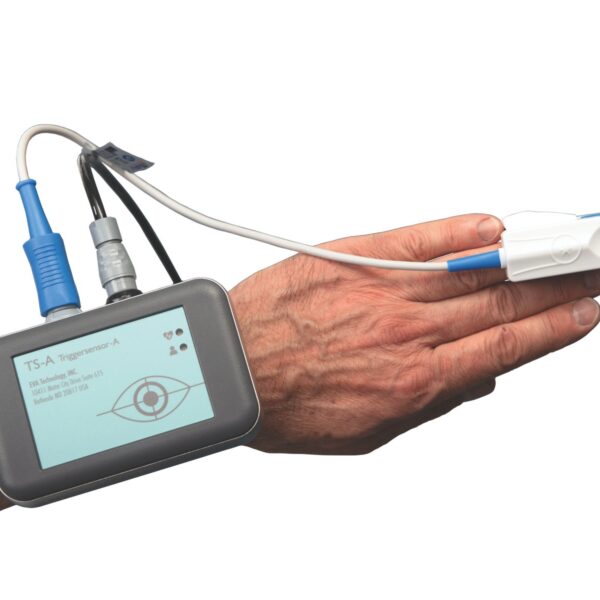
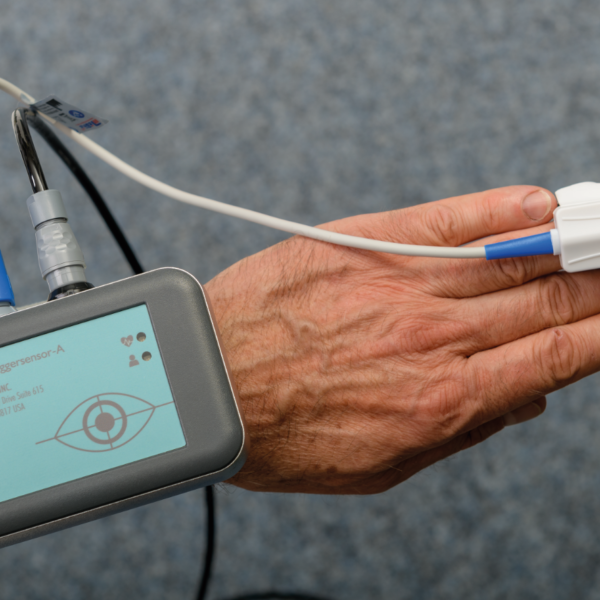
- Trigger sensor type A, with pulse sensor and connection cable
- Hygiene covers for the trigger sensor
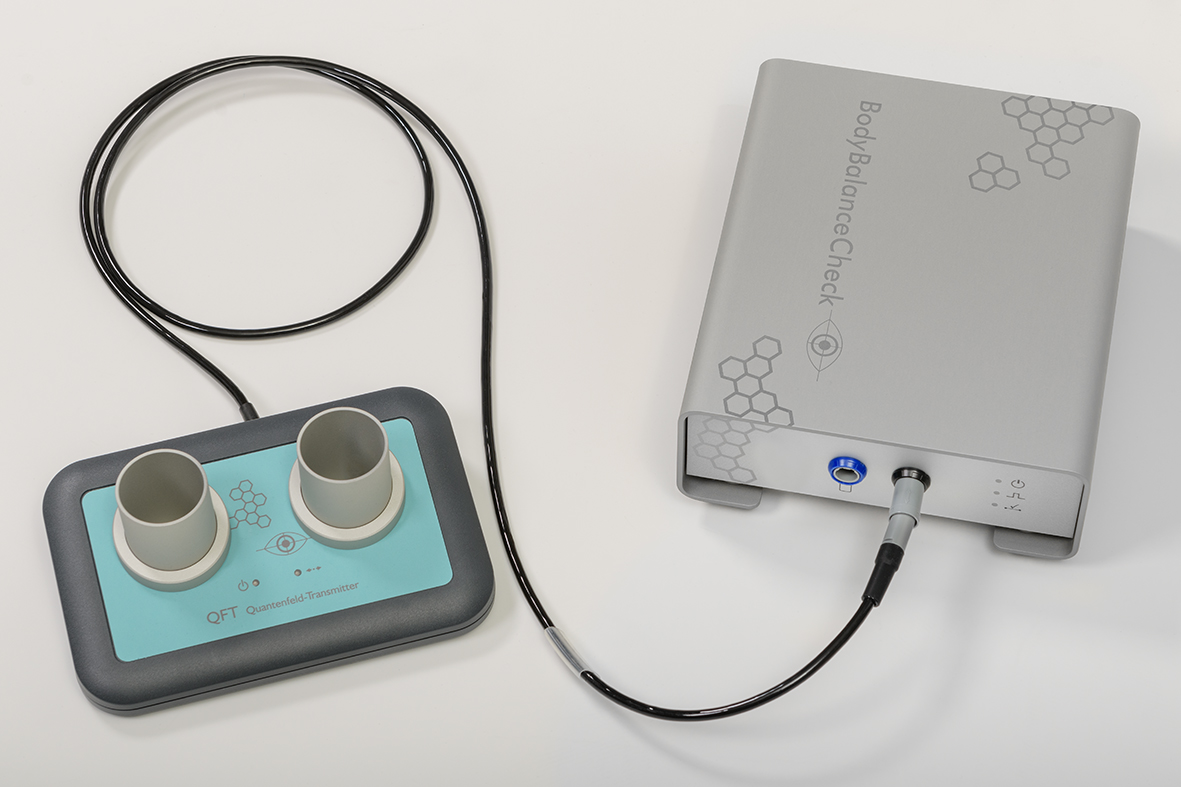
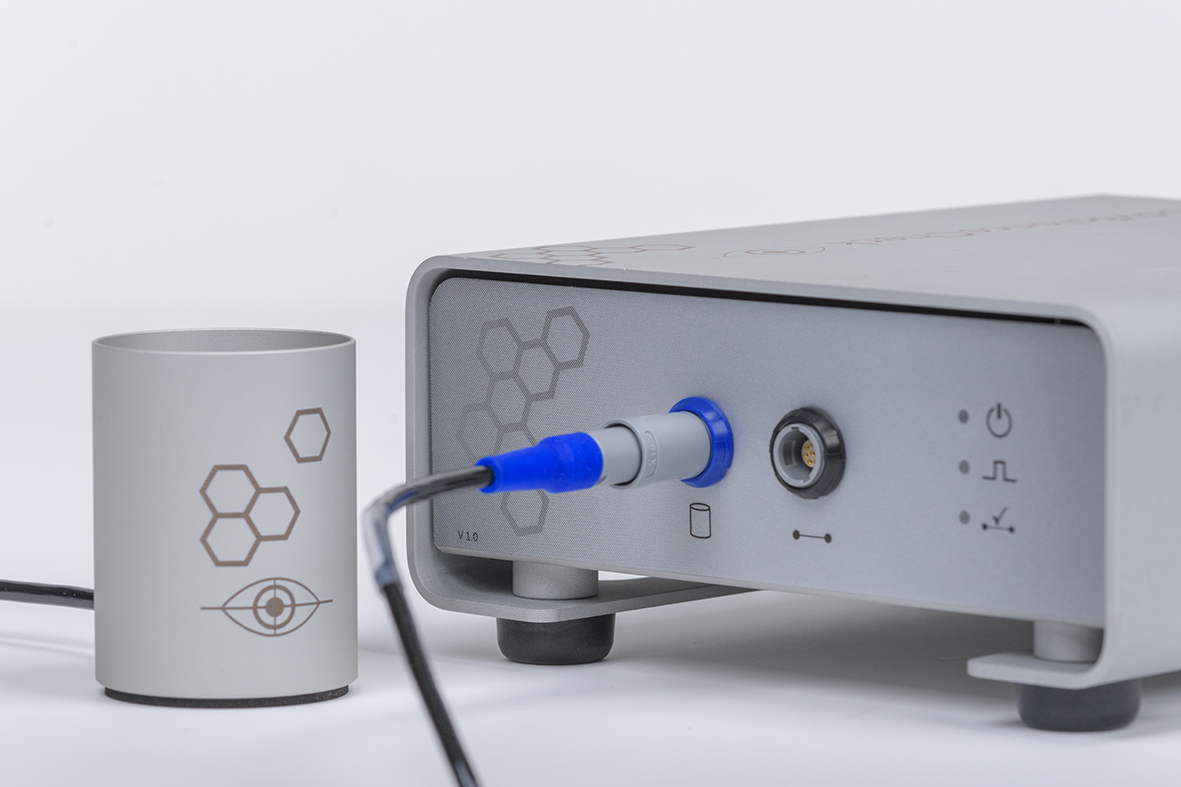
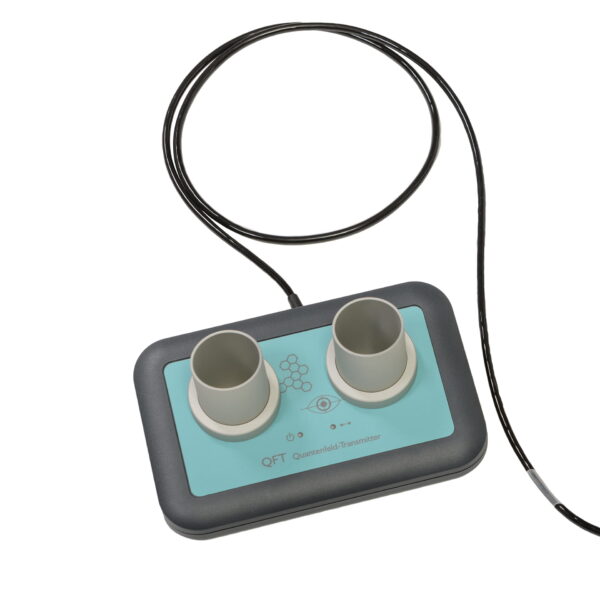
- Transfer cup
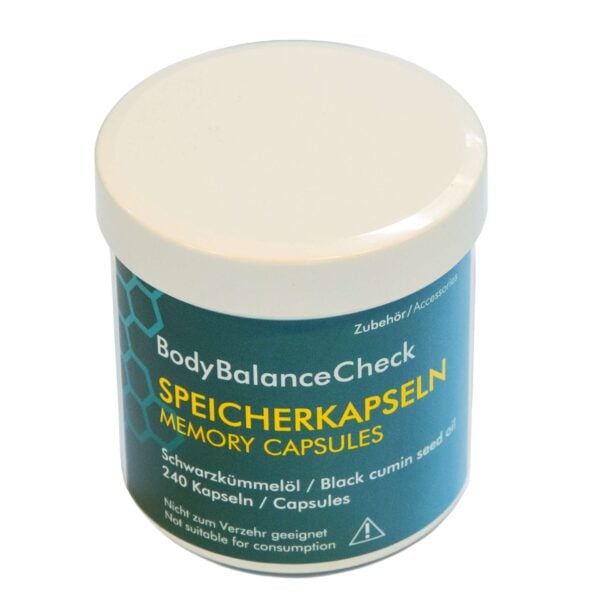
- 240 memory capsules
- Desk pad, 80 x 40 cm
- USB cable, 2.8 m
- USB stick with the software, training videos and the manual
- Silver transport case
- Software licence, Advanced
The printed instructions for use are ordered separately.
How the system is put together
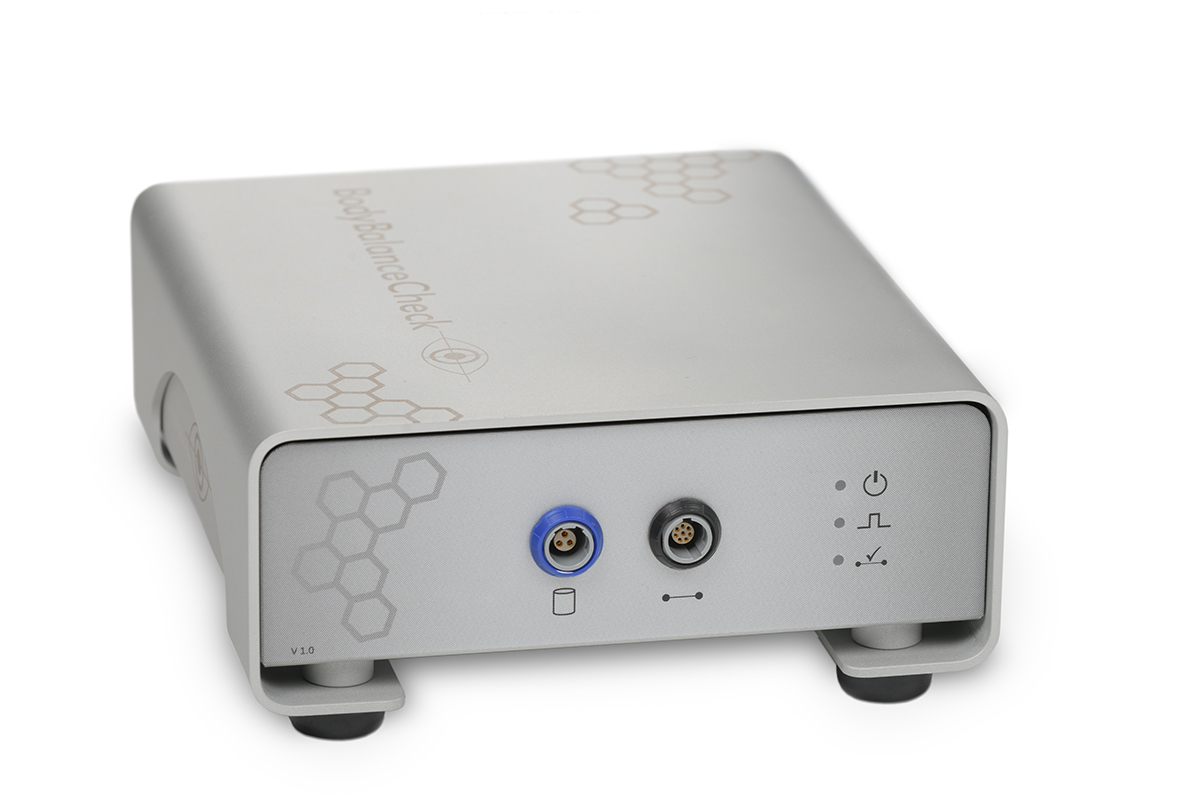
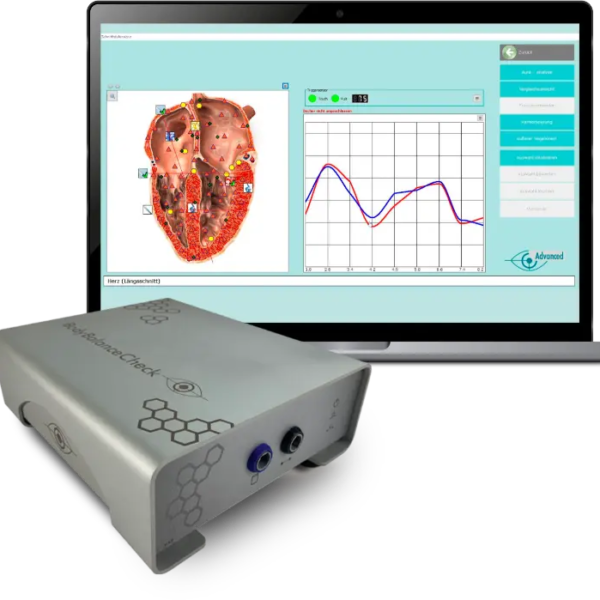
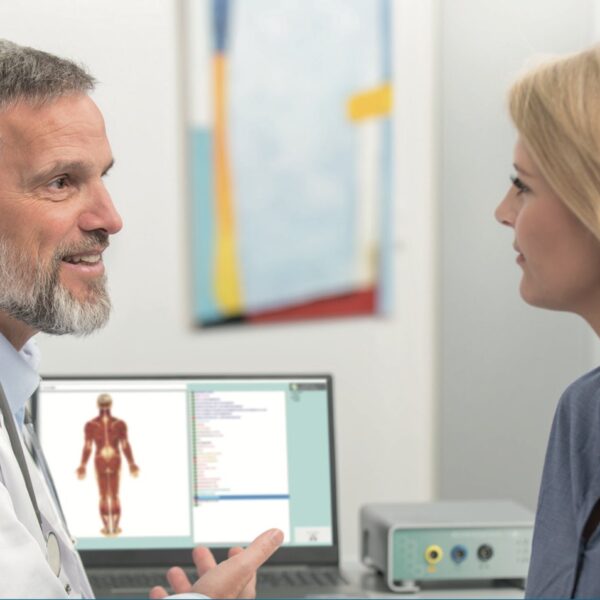
A BBC control unit connects to the computer by USB. The trigger sensor type A is worn at the wrist, with a pulse sensor attached to it. Measured frequency spectra are compared against the etalons stored in the system, and the degree of agreement is expressed as a coefficient. Results are shown as coloured symbols, entropy levels 1 to 6, placed on scan images of organs and structures.
The terms the software uses
- Etalon: from the French for standard. A reference frequency held in the system for comparison.
- Entropy: a measure of order and disorder borrowed from physics. The more energy a system has to apply to return to balance, the greater the entropy. Shown on a scale of 1 to 6.
- Spectral similarity: the agreement between a measured spectrum and a stored etalon.
- Coefficient: the statistical value used to express that agreement.
Computer requirements
Regumed’s recommended specification:
- Intel® i5 or i7 processor
- 16 GB RAM
- 256 GB NVMe drive with at least 20 GB free
- Full HD screen, 1920 x 1080 or 1920 x 1200
- Microsoft® Windows 11 Pro
- One free USB 2.0 or 3.0 A socket for the control unit. Where a USB 2.0 socket is available, use it
- An external USB hard disk, 500 GB, for backups
Tested on Windows 10 and 11 only, 32 or 64 bit. It will not run on macOS, including under Parallels, on Linux, or on iOS or Android tablets. PCs with ARM or Snapdragon processors are not supported.
Who can use it
Operation is reserved for trained personnel. The manufacturer states the system should not be used in pregnancy, with clients who have an active electronic implant, or with clients who have epilepsy. Where a client has other cerebral or neuronal complaints, their GP or specialist should be consulted first.
Intended purpose
The manufacturer states the results are not intended to provide information for the detection, monitoring or treatment of physiological conditions, health conditions, diseases or congenital malformations.
| Weight | 12 kg |
|---|
Be the first to review “BodyBalanceCheck Advanced (TS-A)”
You must be logged in to post a review.
Related products
NLS Scanning
NLS Scanning
NLS Scanning

NLS Scanning
NLS Scanning
NLS Scanning
Reviews
There are no reviews yet.