EQUINE
BIORESONANCE FOR HORSES
For horse owners, vets and equine professionals.
Bioresonance for horses
A different way to explore equine wellbeing
Perhaps you're looking for another avenue to explore with your own horse. Or perhaps you're a vet, therapist or equine professional considering bringing bioresonance into your own practice.
We can help with both.
Chris Russell provides equine BICOM bioresonance sessions, bringing the equipment directly to your horse's yard. And through BICOM UK, we supply professional BICOM devices, training and ongoing support to people who want to offer the approach themselves.
If you've heard the word and nothing else
What bioresonance is, in plain terms
Somebody on the yard has mentioned it. Perhaps a vet or therapist you trust uses it. Perhaps you've seen another horse having a session.
Before you let anyone near your horse with it, you quite reasonably want to know what it actually is.
Bioresonance is an approach that developed in Germany in the late 1970s. BICOM devices have been developed over several decades since, and the manufacturer's own material documents their use internationally in both human and veterinary practice.
The premise is simple to describe. BICOM works with what practitioners refer to as the body's own electromagnetic or bioenergetic information. Information from the horse can be introduced into the device, processed according to the therapy selected by the practitioner, and returned through applicators placed on or around the horse.
Bioenergetic testing followed, where appropriate, by individually selected BICOM therapy.
It isn't a veterinary diagnostic test and it doesn't replace veterinary examination or treatment. We'll come to the evidence and those boundaries further down the page. First, it helps to see what actually happens.
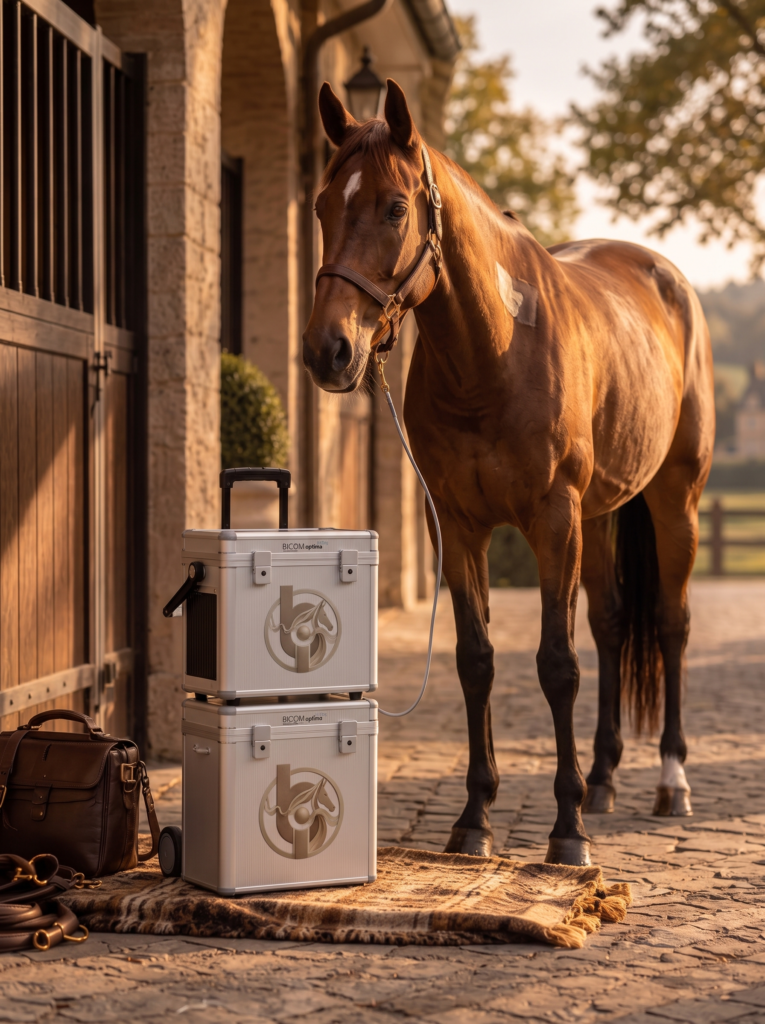
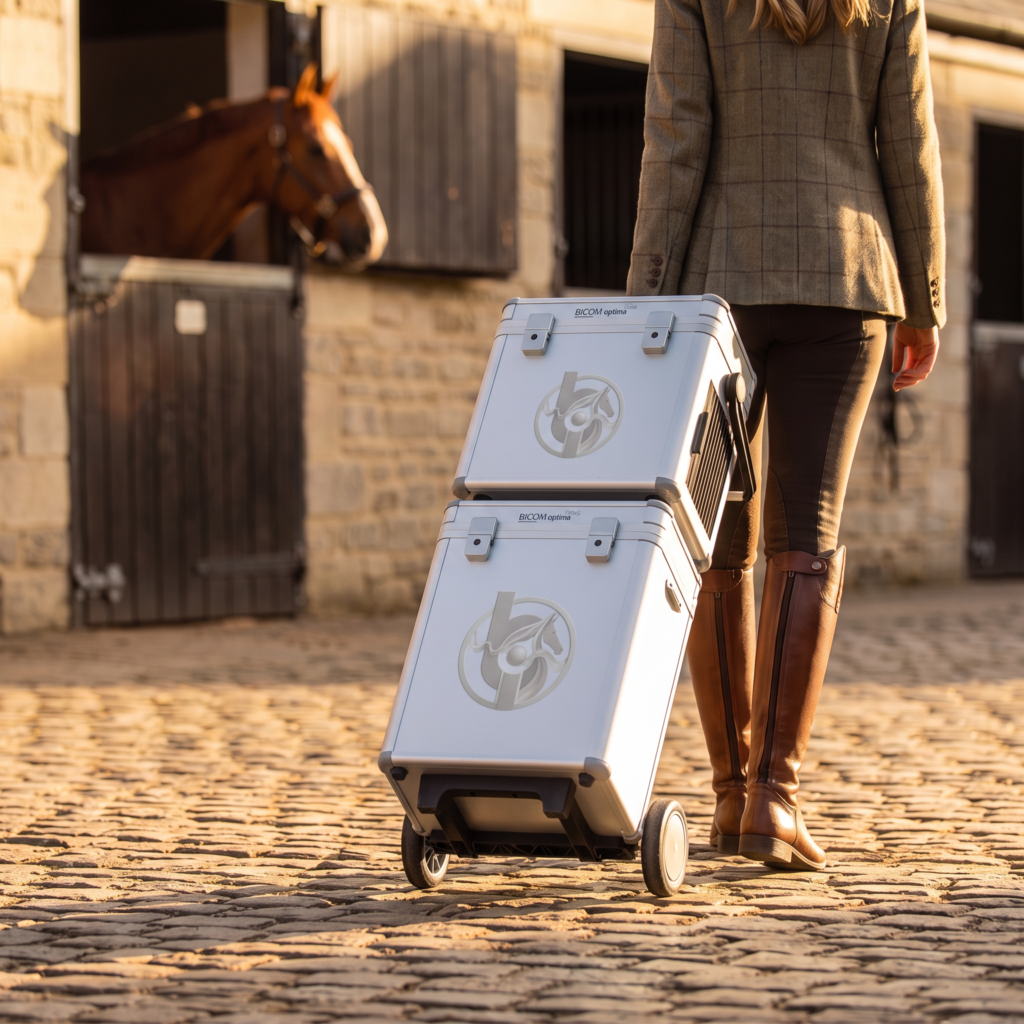
The cases stand by the door. The horse stays put.
30+Years of BICOM development
90+Countries, per the manufacturer
18,000+Devices worldwide in 2023
20 to 30Minutes for a typical equine session
Figures: REGUMED BICOM veterinary brochure, January 2023.
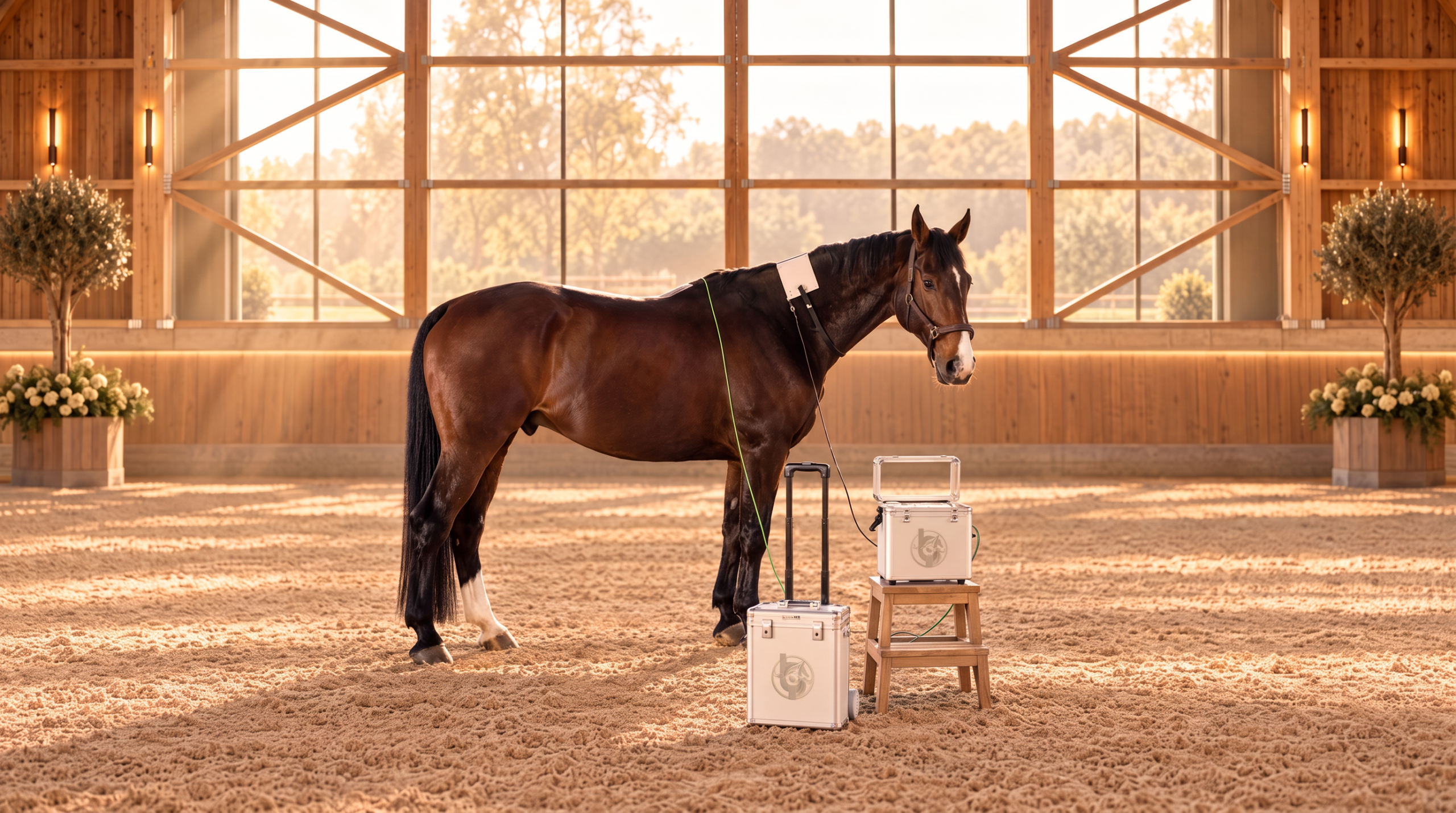
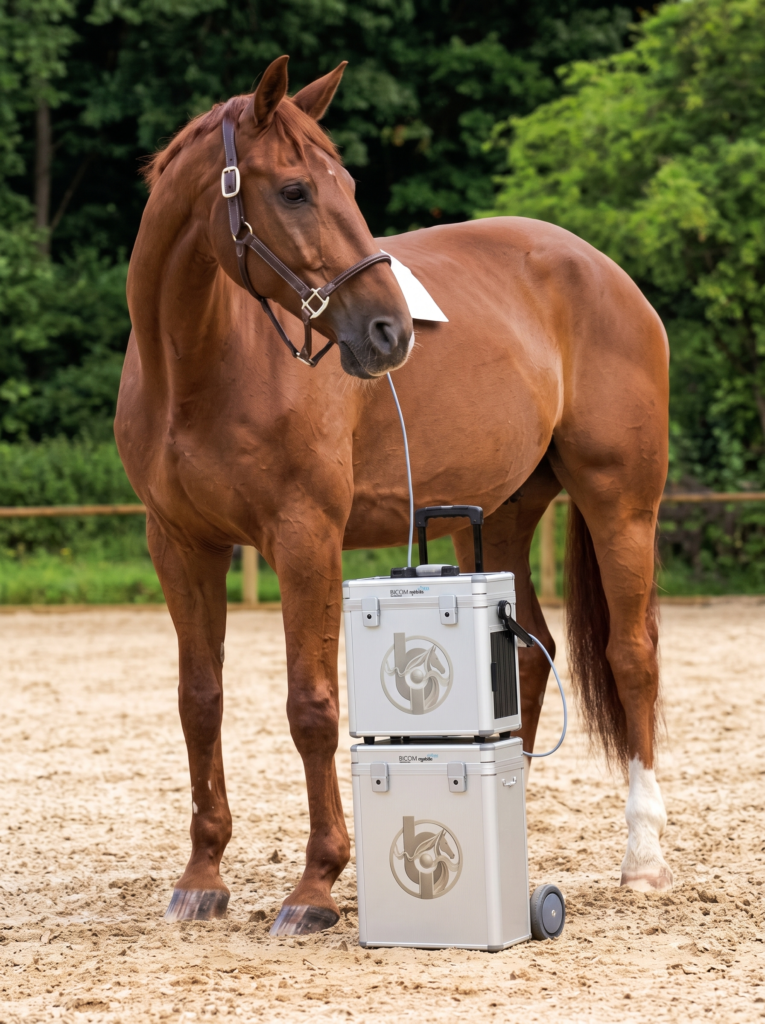
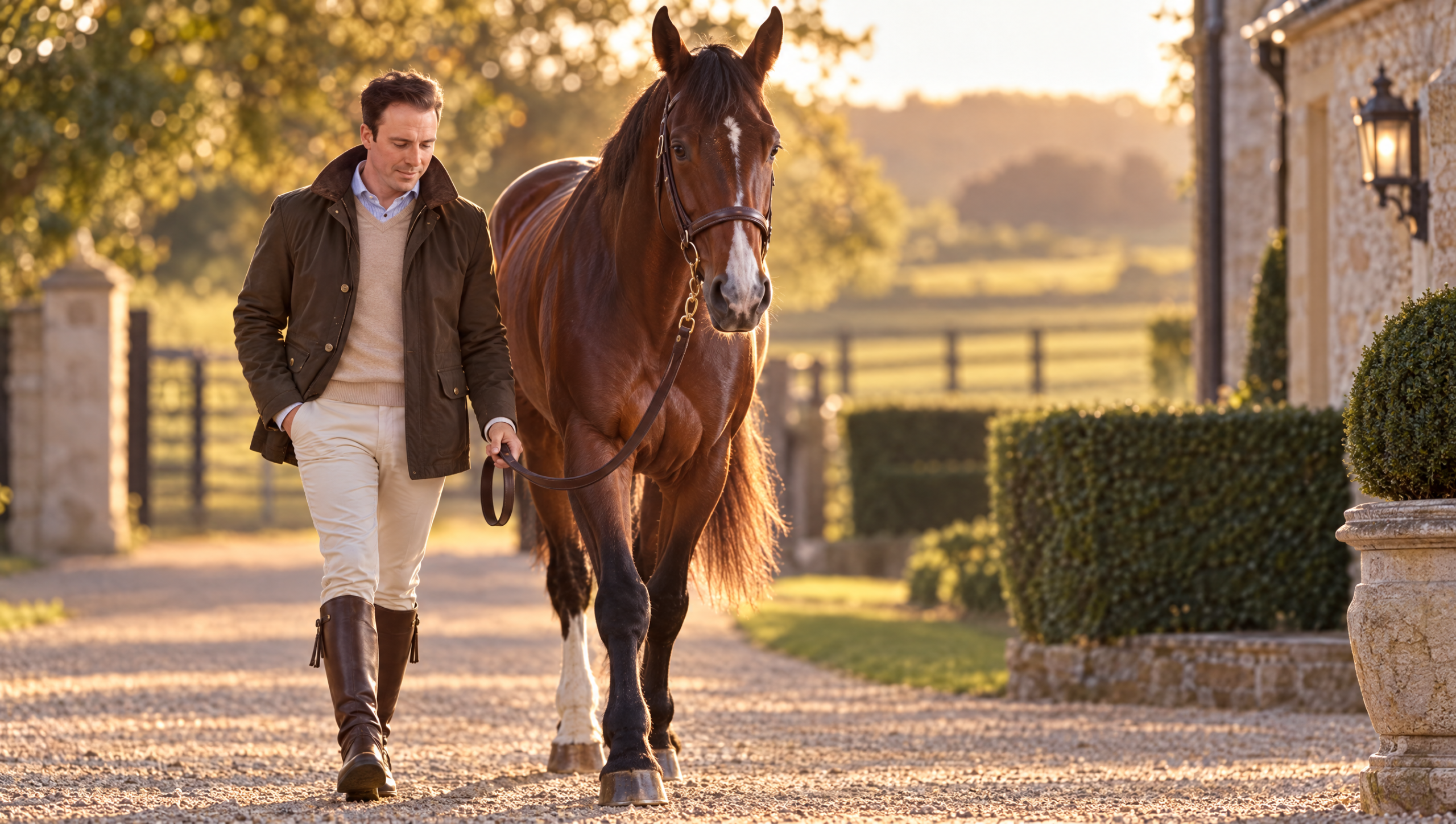
The horse stays on its own yard, in its own arena, on its own terms.
What actually happens
A BICOM session, at your yard
Chris comes to you. We provide equine sessions across the UK, subject to discussing your location and what's practical for the visit.
That means no travelling somewhere unfamiliar simply for the session. The equipment comes to the yard and your horse stays in familiar surroundings. Most sessions take around 20 to 30 minutes, and very little is required of the horse.
01
Before Chris arrives
We'll talk to you about your horse and why you're interested in bioresonance. Depending on what is being explored, Chris may also ask you to have samples from the horse's everyday environment to hand: perhaps feed, forage, supplements or other substances it regularly encounters.
02
The horse's information
Hair and other appropriate samples can be used as part of the BICOM process, with their bioenergetic information introduced into the device for testing or therapy. There's no need for us to take blood. If a veterinary sample is relevant, it would only be one already obtained appropriately through your vet.
03
Bioenergetic testing
Chris works through relevant samples and BICOM test sets, looking at the bioenergetic responses that form part of the BICOM method. This is not a veterinary diagnostic test. It's another way of exploring the horse from a bioenergetic perspective.
04
BICOM therapy
Applicators are positioned on or around the horse according to the therapy being carried out. For example, a flexible mat can be placed across the horse's back and connected to the BICOM device. There's no heat, vibration or loud noise from the applicator.
05
Afterwards
Chris will talk you through what was explored during the session and whether another session may be appropriate. There isn't a predetermined course that every horse needs. What happens next depends on the individual horse, why you've come to us and any veterinary care or management already in place.
Then the horse gets on with being a horse
What a session isn't
- It isn't a substitute for a veterinary examination.
- It isn't an X-ray, scan or conventional diagnostic procedure.
- It isn't medication, a supplement or an injection.
- There's no loud noise, heat or vibration from the therapy applicator, and we don't sedate your horse in order to carry out a session.
Quiet. Non-invasive. And carried out in familiar surroundings.
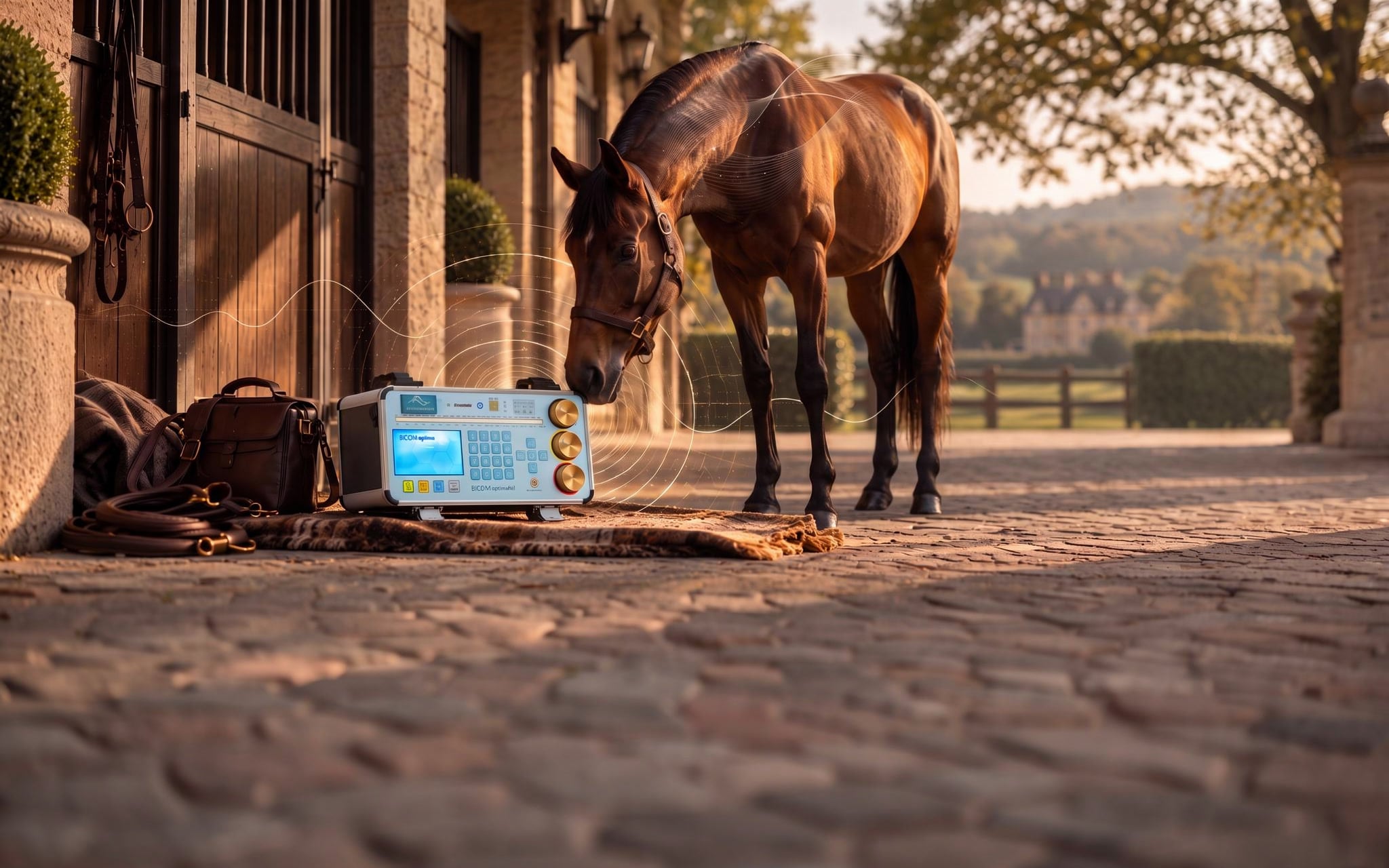
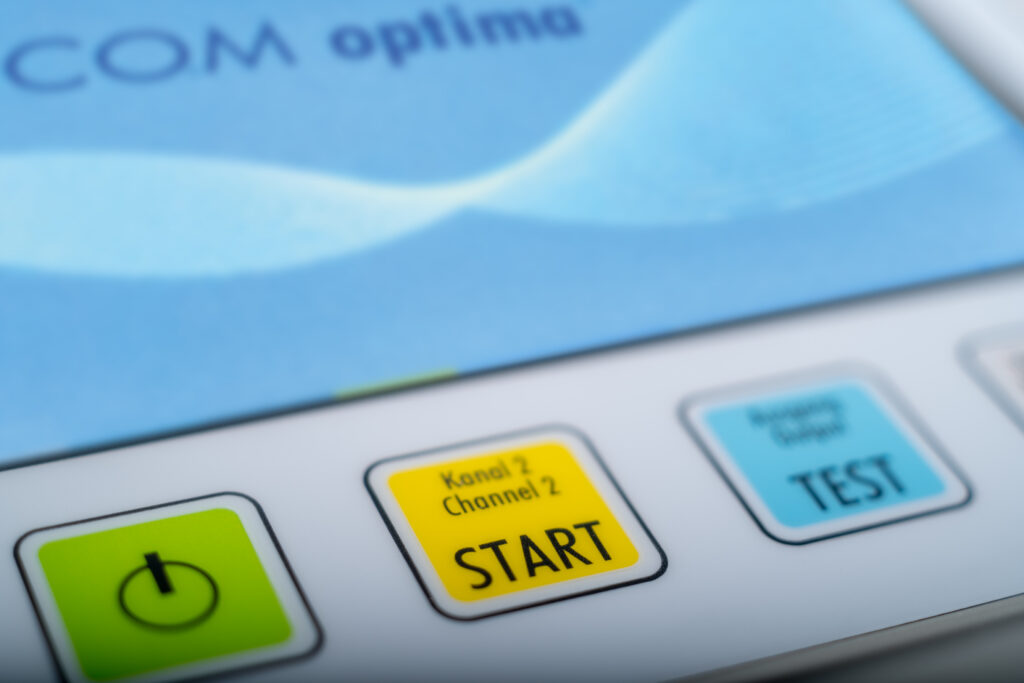
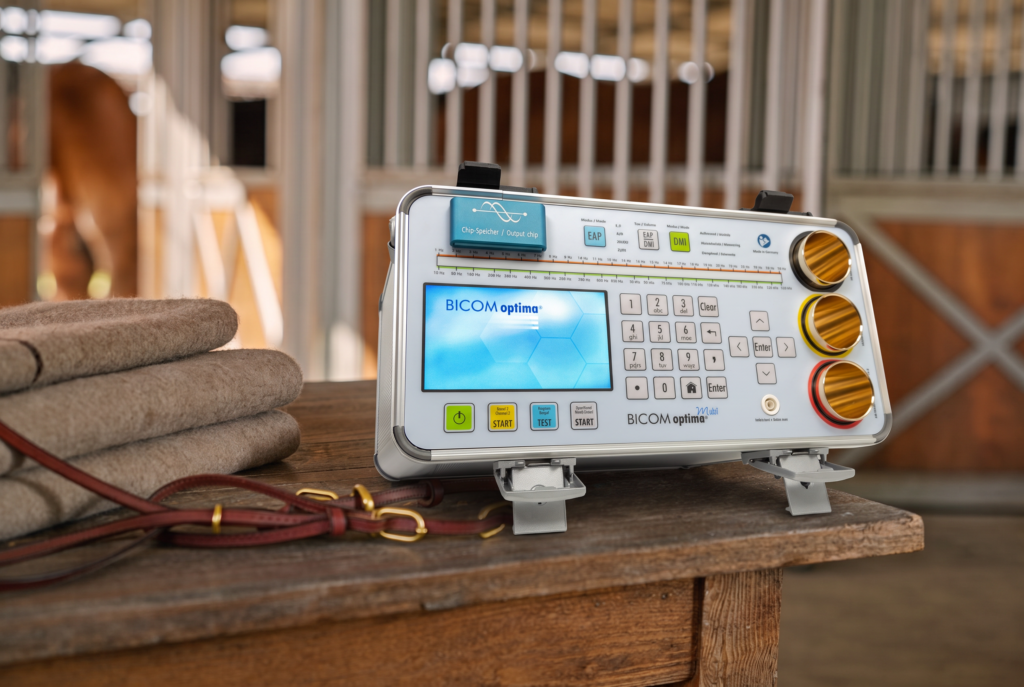
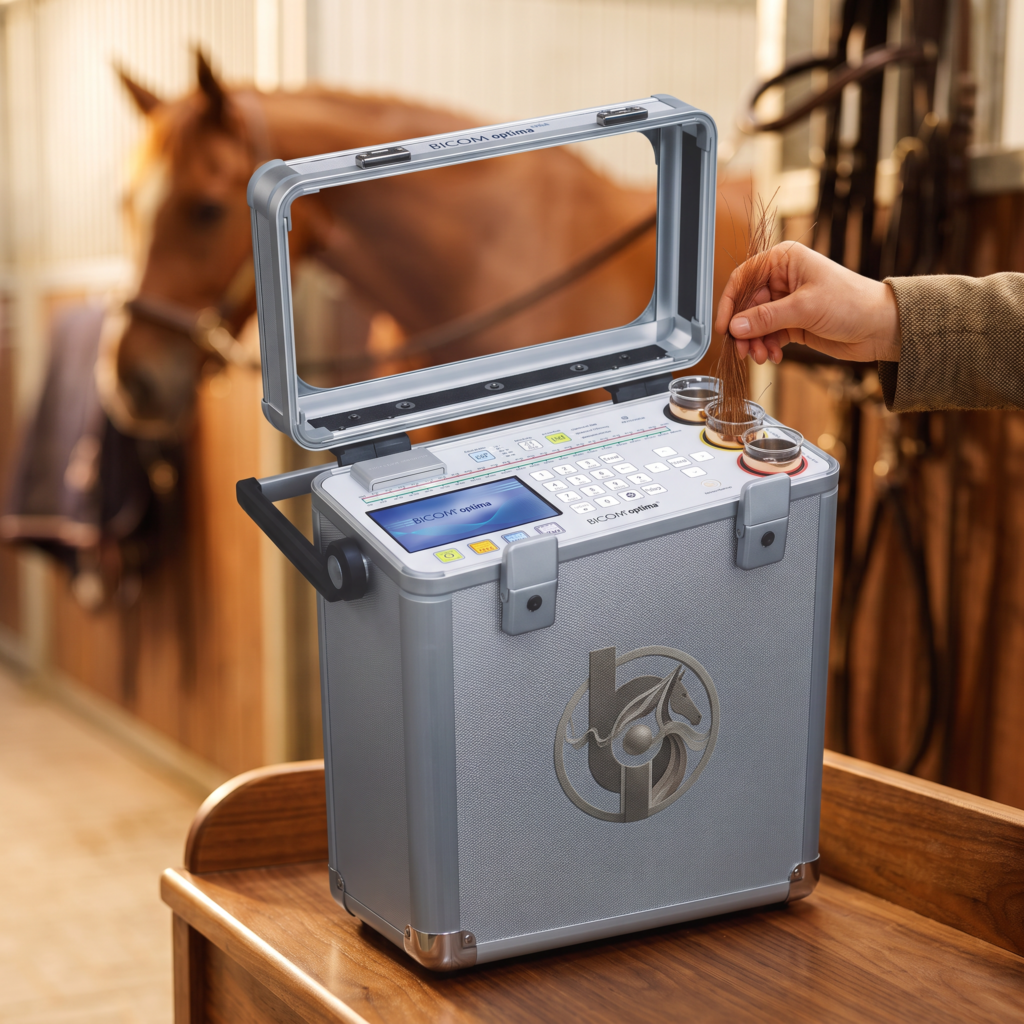
The panel: screen, keypad, three brass cups
The technology behind the session
BICOM Optima Mobil
The equipment Chris brings to the yard is part of the professional BICOM system developed by REGUMED in Germany.
BICOM Optima Mobil is designed so that the system and its accessories can travel with the practitioner. That makes it particularly well suited to equine work, where the treatment room might be a stable, an indoor school or a yard.
- Made in
- Germany, by REGUMED
- Designed for
- Professional BICOM bioresonance
- Format
- Portable professional system
- Applications
- Human and veterinary use
- UK supply and training
- BICOM UK
And if you're looking at the device thinking you'd like to be able to offer this yourself, we supply and train practitioners too. We'll come to that shortly.
For practitioners
Seen on the yard
Short clips from real sessions
Filmed on a phone, between jobs, at ordinary yards. This is what a session actually looks like.
Eight short reels, none of them staged: the mat going on, a horse settling as the session starts, a foot or a leg being worked on, a vet explaining why he uses the method. Swipe through them, or use the arrows. Most are under a minute.
They show you what a session looks like. They are not a promise about what it will do for your horse. For that conversation, your vet comes first, and we're the second call.
Talk to Chris about your horse
How a session works
Eight reels, filmed at yards during sessions. Sound on for the vet.
A few hairs in the cup. That is the sample.
The question every good owner asks
Your vet stays in charge
Bioresonance doesn't change that.
A horse showing signs of colic at eleven o'clock at night needs a vet in the yard. Not a bioresonance session.
Bioresonance should sit alongside appropriate veterinary care, not be used as a reason to delay it.
If your horse is acutely unwell, injured or showing symptoms that need veterinary attention, contact your vet first. And if your horse is already receiving veterinary treatment, don't stop prescribed medication or alter that treatment because of something explored during a bioresonance session without speaking to the veterinary surgeon responsible for your horse.
Some owners come to bioresonance because they feel they've explored many other avenues. Others choose to use it alongside conventional veterinary care. Another perspective doesn't have to mean abandoning the one you already have.
In his own words
A vet explains
Brendan Clarke is a veterinary surgeon who has seen BICOM bioresonance in practice.
In this video, he talks through the testing, what a session looks like from the practitioner's perspective and how he discusses the approach with owners.
A better answer than any brochure, and worth watching before you decide.
Where does the evidence stand?
What we'll say, and what we won't
If you're considering something outside conventional veterinary medicine, you should ask difficult questions. We'd rather you did.
What there is
BICOM bioresonance has been used by veterinary practitioners internationally for decades, and there is a body of practitioner literature documenting veterinary experience with the method, including horse-specific Congress papers and clinical accounts.
These are practitioner reports and clinical experiences. They aren't the same thing as controlled clinical trials, and we won't present them as though they were.
What there isn't
The mechanisms proposed for bioresonance aren't accepted as established by mainstream veterinary medicine, and the evidence base isn't equivalent to that required to establish the efficacy of a conventional veterinary treatment.
So we won't promise that BICOM will treat, cure or change a particular condition in your horse.
BICOM treatment for your horse
At your yard, anywhere in the UK
Equine sessions are carried out personally by Chris Russell.
Tell us where your horse is based, what has led you to consider bioresonance and whether your horse is currently under veterinary care.
Because we travel throughout the UK, please call us before booking so we can discuss your location and what's practical.
Where several horses at the same yard are interested, tell us that too. It may make more sense to organise the visit around the yard.
One horse on a private yard. A competition yard. A breeding establishment. Start with a conversation.
Perhaps you want to offer BICOM yourself
We treat with it. We train with it. We supply it.
If you're a vet, equine therapist or other professional working with horses, you may have reached this page for a different reason.
Through BICOM UK, we supply both the clinic-based BICOM Optima and the portable BICOM Optima Mobil, together with training and ongoing practitioner support. For equine practitioners moving between yards, the portability of Optima Mobil has an obvious advantage.
Your practice moves. Your BICOM can move with it.
But choosing the device is only the beginning. BICOM's own practitioner material makes the point that this isn't intended to be push-button therapy. There are established programmes and procedures to help practitioners begin, but the value of the system develops alongside the practitioner's knowledge.
That's why training is included when you purchase your BICOM through BICOM UK. Chris personally trains practitioners who purchase through us. The current programme includes 14 online courses, each with its own certificate, so you can learn in manageable stages and return to the material as your experience develops.
The training is manufacturer approved, and support continues afterwards through BICOM UK, the wider practitioner community and access to around 25 years of searchable BICOM Congress material, including veterinary and equine-specific practitioner papers. It's like having a BICOM specialist on hand 24/7.
Explore BICOM Optima
Explore BICOM Optima Mobil
Explore practitioner training
Veterinary knowledge you can keep building on
You aren't starting from a blank page
The BICOM library contains decades of Congress papers, practitioner reports and therapy material, including veterinary and horse-specific material.
For an equine practitioner, your initial training is only the starting point. As questions arise in practice, you have an established body of BICOM practitioner experience to search and explore.
These resources document practitioner experience rather than established veterinary efficacy. But for someone learning and developing within the BICOM system, they provide a substantial professional knowledge base.
Buy the device. Learn the fundamentals. Then keep learning.
Explore equine practitioner material
Bringing BICOM into your practice
Start with how you want to work, then choose the technology
- Are you a vet working from a fixed practice?
- An equine therapist travelling between yards?
- Running your own competition or breeding yard?
- Or working with horses as part of a broader animal practice?
Start there, rather than with a specification sheet.
David Franklin, the BICOM UK representative, will talk through how you want to work, the appropriate BICOM system, current investment, what's included and the licence arrangements.
If you decide to proceed, Chris takes you through the training, and BICOM UK continues to support you as your experience develops.
From choosing your device to learning how to use it, you're not doing it alone.
Talk to David about BICOM for equine practice
Next step
Where do you want to start?
I want to explore treatment for my horse
Chris provides equine BICOM sessions at yards across the UK. Tell us where you're based and what's led you to explore bioresonance. We'll talk through the session, fees and travel arrangements before booking.
Talk to us about my horse
I want to offer BICOM in my practice
Talk to David about BICOM Optima and BICOM Optima Mobil, the current investment, what's included, training with Chris and ongoing practitioner support.
Talk to BICOM UK