
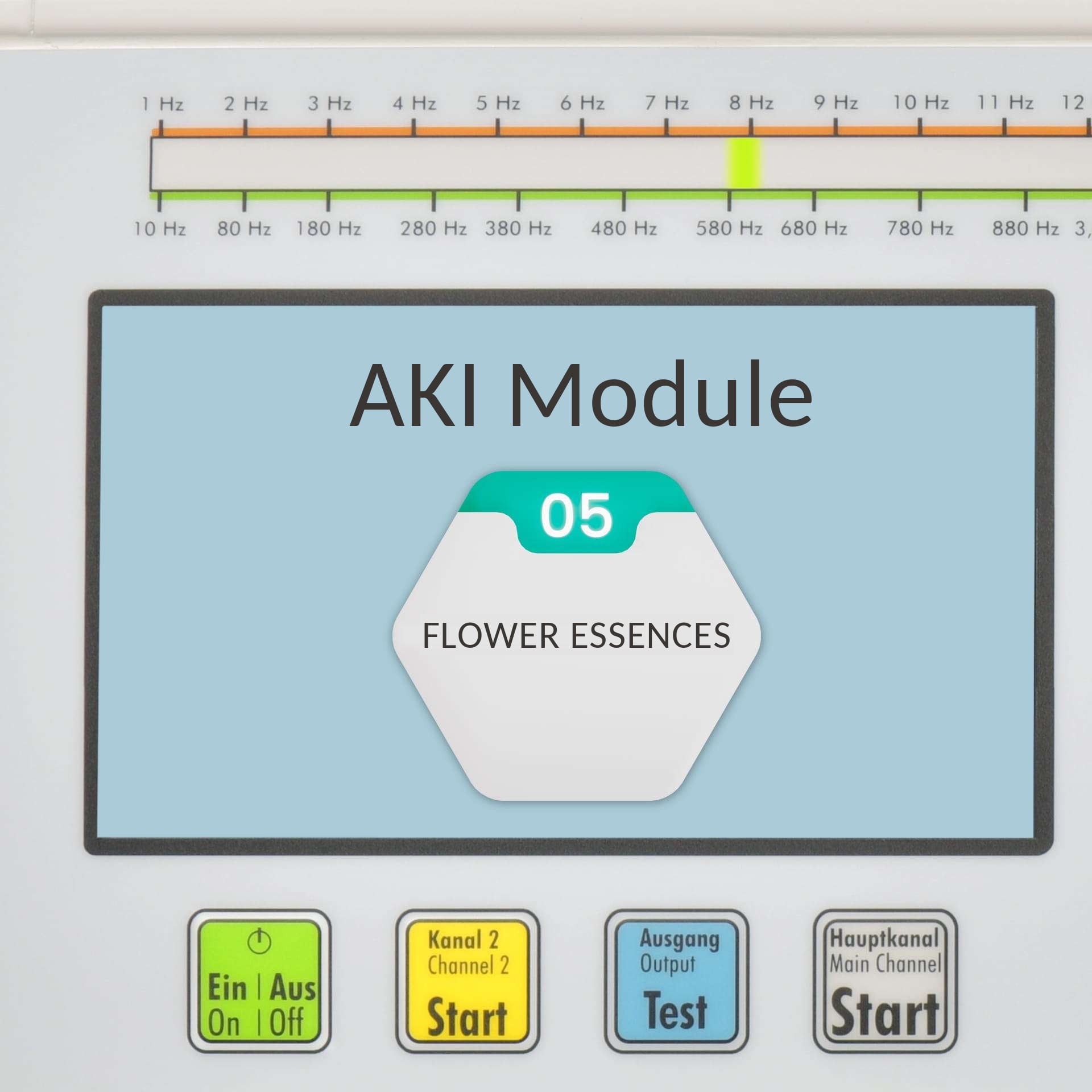
AKI specialist module 5 Flower essences
£779.00 ex. VAT
AKI specialist module 5, Flower essences: 204 essences for BICOM optima® 2nd generation, drawn from three traditions. 39 Bach flowers, 69 Australian bush flower essences and 96 Californian flower essences, each held individually rather than as a composed complex. The largest of the six AKI modules. Developed with the Academy for Complementary and Information Medicine.
Art. No. GSTF5
The exception among the six
Module 5 is the one module that is not built from composed complexes. Here 204 individual essences are held, drawn from three traditions and listed in full below.
Bach flowers, 39
Agrimony, Aspen, Beech, Centaury, Cerato, Cherry Plum, Chestnut Bud, Chicory, Clematis, Crab Apple, Elm, Gentian, Gorse, Heather, Holly, Honeysuckle, Hornbeam, Impatiens, Larch, Mimulus, Mustard, Oak, Olive, Pine, Red Chestnut, Rock Rose, Rock Water, Scleranthus, Star of Bethlehem, Sweet Chestnut, Vervain, Vine, Walnut, Water Violet, White Chestnut, Wild Oat, Wild Rose, Willow, Rescue Remedy
Australian bush flower essences, 69
Alpine Mint Bush, Angelsword, Autumn Leaves, Banksia Robur, Bauhinia, Billy Goat Plum, Black-eyed Susan, Bluebell, Boab, Boronia, Bottlebrush, Bush Fuchsia, Bush Gardenia, Bush Iris, Christmas Bell, Crowea, Dagger Hakea, Dog Rose, Dog Rose of the Wild Forces, Five Corners, Flannel Flower, Freshwater Mangrove, Fringed Violet, Green Essence, Green Spider Orchid, Grey Spider Flower, Gymea Lily, Hibbertia, Illawarra Flame Tree, Isopogon, Jacaranda, Kangaroo Paw, Kapok Bush, Lichen, Little Flannel Flower, Macrocarpa, Mint Bush, Monga Waratah, Mountain Devil, Mulla Mulla, Old Man Banksia, Paw Paw, Peach-flowered Tea-tree, Philotheca, Pink Flannel Flower, Pink Mulla Mulla, Red Grevillea, Red Helmet Orchid, Red Lily, Red Suva Frangipani, Rough Bluebell, She Oak, Silver Princess, Slender Rice Flower, Southern Cross, Spinifex, Sturt Desert Pea, Sturt Desert Rose, Sundew, Sunshine Wattle, Sydney Rose, Tall Mulla Mulla, Tall Yellow Top, Turkey Bush, Waratah, Wedding Bush, Wild Potato Bush, Wisteria, Yellow Cowslip Orchid
Californian flower essences, 96
Aloe Vera, Alpine Lily, Angelica, Angels Trumpet, Arnica, Baby Blue Eyes, Basil, Blackberry, Black-eyed Susan, Bleeding Heart, Borage, Buttercup, Calendula, California Pitcher Plant, California Poppy, California Wild Rose, Calla Lily, Canyon Dudleya, Cayenne, Chamomile, Chaparral, Chrysanthemum, Corn, Cosmos, Dandelion, Deer Brush, Dill, Dogwood, Echinacea, Evening Primrose, Fairy Lantern, Fawn Lily, Filaree, Forget-me-not, Fuchsia, Garlic, Golden Ear Drops, Golden Yarrow, Goldenrod, Hibiscus, Hound’s Tongue, Indian Paintbrush, Indian Pink, Iris, Larkspur, Lavender, Lotus, Madia, Mallow (Sidalcea), Manzanita, Mariposa Lily, Milkweed, Morning Glory, Mountain Pennyroyal, Mountain Pride, Mugwort, Mullein, Nasturtium, Oregon Grape, Penstemon, Peppermint, Pink Monkeyflower, Pink Yarrow, Poison Oak, Pomegranate, Pretty Face, Quaking Grass, Queen Anne’s Lace, Quince, Rabbitbrush, Red Clover, Rosemary, Sage, Sagebrush, Saguaro, Saint John’s Wort, Scarlet Monkeyflower, Scotch Broom, Self-Heal, Shasta Daisy, Shooting Star, Snapdragon, Star Thistle, Star Tulip, Sticky Monkeyflower, Sunflower, Sweet Pea, Tansy, Tiger Lily, Trillium, Trumpet Vine, Violet, Yarrow, Yellow Star Tulip, Yerba Santa, Zinnia
Essences can run on channel 2 alongside a BICOM® program, or be used on their own, including for making up oils and ointments.
From the AKI presentation
All 38 Bach flowers plus rescue drops, the Australian bush essences and the Californian essences, in one module. Each essence can be stored to a medium on its own, or combined with other essences and with the complexes from the other AKI modules.
For practitioners who already work with flower essences, this puts the whole range inside the BICOM optima®, with no bottles to stock.
How it runs in the device
The AKI essences are called up from main menu item 6 on the BICOM optima®, alongside the substance complexes already in your device. You can use a single essence or several together.
- With a program: run the essence in channel 2 alongside a program (menu 3) or a program sequence (menu 4).
- Therapy type A: channel 2 carries the essence as A information, with eightfold amplification. Norbert Lindner explains that this is where the second channel came from.
- Between sessions: essences can be stored to a carrier such as oil, for clients to take home.
Where the modules come from
Developed with the Akademie für Komplementär- und Informationsmedizin (AKI), the Academy for Complementary and Information Medicine, in Malchow, Germany. Topics and contents were chosen from the experience of AKI’s application consultants, in consultation with long-standing BICOM® practitioners.
Compatibility
For BICOM optima® devices of the 2nd generation, the touch screen models: V7, V8 and VET. Not for 1st generation devices.
If you are not sure which generation your BICOM optima® is, press 9 for settings then 0 for version, and read the version number under “update”.
Watch the presentations
Reiko Wollenzin, director of AKI and a BICOM® therapist and trainer for 20 years, walks through all six modules. Norbert Lindner gives a shorter practitioner’s view of how he uses them. Both were first shown at the 2022 International Online Congress.
- Explanation of the AKI Extension Modules, Reiko Wollenzin (21 minutes)
- Explanation of the AKI Extension Modules, Norbert Lindner (5 minutes)
- AKI Extension Modules, short overview (38 seconds)
The six AKI modules
Each module stands on its own. Together they hold more than 10,000 individual pieces of information.
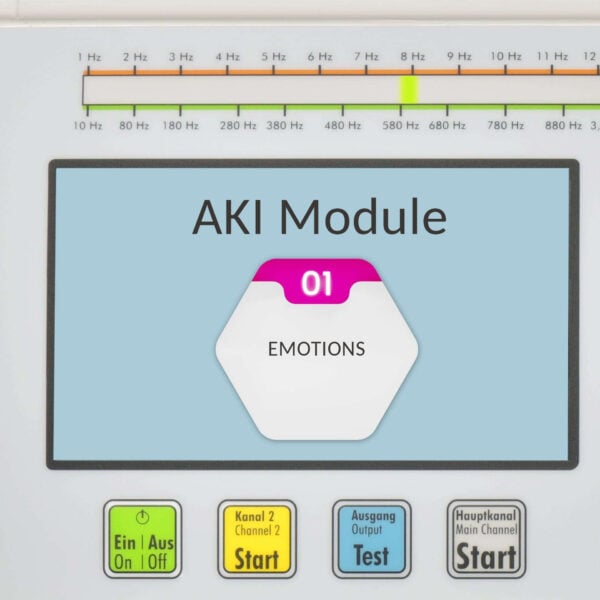
- Module 1, Emotions
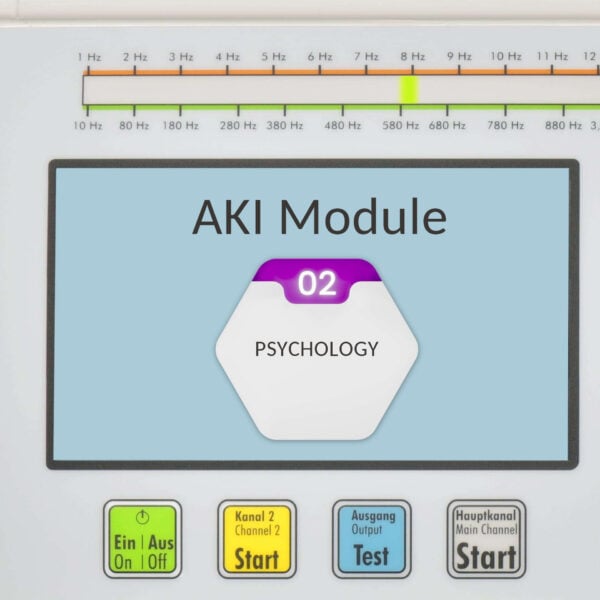
- Module 2, Psychology
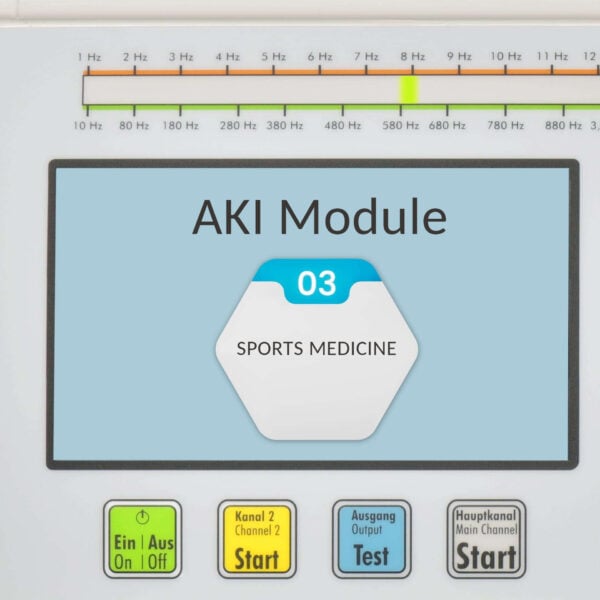
- Module 3, Sports medicine
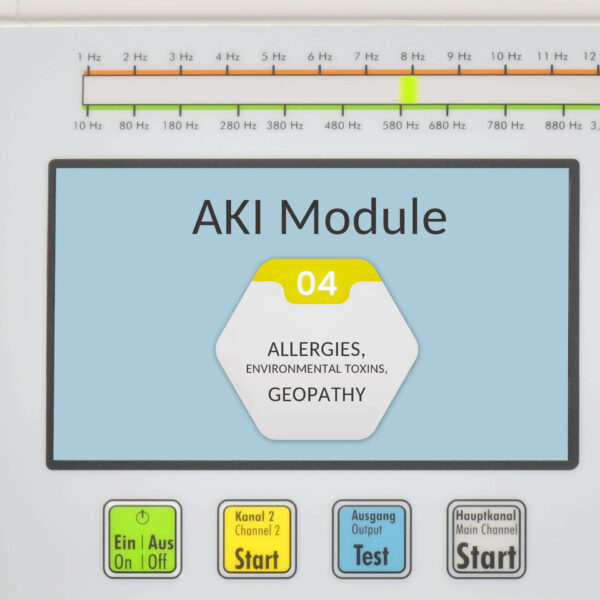
- Module 4, Allergies, environmental toxins, geopathy
- Module 5, Flower essences (this module)
- Module 6, VET special
On the essence names
Essence names are the traditional and manufacturer’s names. They are not claims that an essence treats, cures or prevents any condition. The essences carry therapy type A only and hold no strain information. The modules are not a diagnostic tool, and are intended for trained BICOM® practitioners.
Source: AKI GmbH presentations of the AKI extension modules, International Online Congress 2022.
| Weight | 0.05 kg |
|---|
Be the first to review “AKI specialist module 5 Flower essences”
You must be logged in to post a review.
Related products


Software
Software

Software

Software
Reviews
There are no reviews yet.