
Research library
Every study, paper and practice report on this site that touches bioresonance, in one place. Each entry is labelled by who produced it, so you can weigh it for yourself:
Independent: a university, hospital or research institute with no commercial link to a device manufacturer, published outside the bioresonance community.
Manufacturer commissioned: funded, produced or published by a device maker or its institute. Reported as published; the commercial interest is stated.
Practitioner report: practitioners on their own patients, usually presented at the manufacturer’s congress, not independently reviewed. Experience from clinical practice rather than a controlled study.
We include critical assessments alongside supportive ones, and each summary describes what the paper reports rather than what we think of it. Nothing on this page is a claim by us that bioresonance diagnoses or treats any condition. For a summary of the older studies, read the Report on Bioresonance.
Searches titles and full text of the research library only.
Independent research
Advances in Bioelectromagnetism: two chapters on the proposed mechanisms of bioresonance therapy (2026)
Nevoit, Mintser, Potyazhenko and Vainoras; and Barassi and colleagues (2026), in Advances in Bioelectromagnetism, Elsevier. Two narrative book chapters by proponents on proposed mechanisms. Not primary data. Confirmed through Crossref only; chapters not read.
Read the paperBioresonance method of estimating metabolic function of the liver in dogs
Bobrytska and colleagues (2019), Scientific Horizons, Zhytomyr. Diagnostic comparison against blood chemistry in 35 dogs. Reports 91.4 per cent agreement with laboratory liver markers. Citation confirmed through DOAJ only.
Read the paperBioresonance method of estimation and correction of functional state of pancreas in dogs
Bobrytska, Ugai and colleagues (2018), Scientific Horizons, Zhytomyr, Ukrainian. Diagnostic study with a Parkes-D device. Reports agreement between bioresonance testing and laboratory findings. Sample not verified; citation confirmed through Crossref only.
Read the paperBioresonance therapy in the rehabilitation of post-traumatic syndromes using the multiphysics device Muflon-X
Fyk and colleagues (2025), Ukrainian Journal of Military Medicine. Described as a prospective randomised trial, 135 patients. Reports pain, sleep, CRP and IgG changes with a Ukrainian multiphysics device, not a BICOM or MORA system. Citation verified through Crossref only.
Read the paperQuantum medicine: extremely low-frequency magnetic fields in the management of chronic pain (Barassi and colleagues, 2022)
Barassi, Pokorski, Pellegrino and colleagues (2022), Advances in Experimental Medicine and Biology. Clinical observational study with an ion cyclotron resonance device; sample not stated in the abstract. Reports pain reduction. Cited by the group's 2024 Medicina paper as its mechanism basis.
Read the paperBioresonance therapy and manual lymphatic drainage: effects on immune indices in dogs
Erdoğan and colleagues (2025), İstanbul Rumeli University Journal of Health Sciences. Before and after, uncontrolled, seven dogs. Reports a 2.8 per cent rise in a device-derived spleen index only; other indices unchanged. The measures come from the same quantum pet analysis device.
Read the paperBioresonance, electrophoresis and RT-PCR compared in the diagnosis of feline infectious peritonitis
Farsijani, Safi and Shirazi Beheshtiha (2023), Archives of Razi Institute. Diagnostic comparison in 30 cats. Reports 100 per cent sensitivity and 81.8 per cent specificity for the specific modulation frequency test. The reference standard included the index test itself, which is a design flaw.
Read the paperVerification of a bioresonance method for neutralising chosen pathogens (preprint)
Krzysztof, Strus and Nabagło (2020), Research Square preprint. In vitro test on bacterial and fungal strains. Reports no significant reduction in pathogen counts compared with controls. Not peer reviewed.
Read the paperEffect of a bioresonance device on viability and metabolic activity in human umbilical venous endothelial cells (preprint)
Cosentino and colleagues, University of Insubria (2026), bioRxiv preprint. In vitro, blinded, active device against a mock device, cell cultures. Reports the active QDOME device reduced hydrogen peroxide induced cell death. Not yet peer reviewed.
Read the paperEffects of bioresonance application in mice with depressive-like behaviour
Cabıoğlu and colleagues (2022), Bulletin of Experimental Biology and Medicine. Animal study, chronic mild stress model in mice. Reports shorter immobility in forced swim and tail suspension tests after longer bioresonance exposure. The authors call for replication.
Read the paperCoherence in aqueous systems and a resonance-based isotherapeutic remedy in chronic psoriasis vulgaris
Del Giudice and colleagues (2015), Current Topics in Medicinal Chemistry. Labelled a phase II clinical trial; sample size not stated in the abstract. Reports cytokine reductions and outcomes the authors call comparable to narrow-band UVB, using a "WHITE Holographic Bioresonance" method.
Read the paperThe effect of bioresonance on quality of life in breast cancer follow-up: case report
Genç and colleagues (2024), Anadolu Tıbbı Dergisi, Turkish. Case report, two patients in breast cancer follow-up. Reports SF-36 quality of life improvement after one month of BICOM Optima sessions. Two cases, no comparison group.
Read the paperQuantum medicine and IBS-associated chronic low-back pain: a pilot observational study of bioresonance therapy
Barassi and colleagues (2024), Medicina (Kaunas). Pilot observational study, before and after, 20 patients. Reports changes in SF-36, Bristol stool scale and faecal calprotectin after eight sessions. The device is an extremely low frequency electromagnetic field system, not BICOM or MORA.
Read the paperOne-year outcomes of bioresonance therapy for smoking cessation: a prospective primary care study
Dur and Şensoy (2026), International Journal of Traditional and Complementary Medicine Research. Prospective single-arm cohort, 50 smokers, carbon monoxide verified at one and three months. Reports 28 per cent continuous abstinence at twelve months; low mood and sleep problems predicted relapse.
Read the paperBioresonance therapy for smoking cessation: a retrospective clinic cohort
Marakoğlu and colleagues (2024), İstanbul Medical Journal. Retrospective cohort from a smoking cessation clinic, 1,272 patients. Reports MORA bioresonance was the most chosen method, and no significant difference in quit success between methods (p=0.132).
Read the paperBioresonance, an alternative therapy for mild and moderate depression
Muresan and colleagues (2022), Experimental and Therapeutic Medicine. Two-group comparison against SSRI monotherapy, not randomised. Reports mean Hamilton score change of 3.1 with bioresonance against 2.2 with SSRI. Overlaps the group's 2021 dataset.
Read the paperEvaluation of an alternative depression therapy using bioresonance
Muresan and colleagues (2021), Journal of Interdisciplinary Medicine. Single arm, before and after, 40 patients. Reports a fall in Hamilton depression score after five weeks. Likely the same cohort as the group's Journal of Medicine and Life paper.
Read the paperBioresonance therapy may treat depression
Muresan and colleagues (2021), Journal of Medicine and Life. Three groups, not randomised: bioresonance alone, bioresonance plus antidepressant, antidepressant alone, 140 patients. Reports HAM-D reductions of 3.1, 3.8 and 2.3 points after five weeks. MORA Nova device.
Read the paperThe application of bioresonance therapy for the correction of the overtrained athlete syndrome
Badtieva and colleagues (2018), Voprosy Kurortologii. Controlled trial with a sham (non-functioning) device, 60 athletes, Russian. Reports improvement in clinical and instrumental measures against the sham group.
Read the paperUse of bioresonance therapy in complex treatment of patients with diabetes mellitus type 2
Kiryanova and colleagues (2017), Kazan Medical Journal. Three-group comparison (treatment, control, placebo), 413 patients, Russian. Reports lower HbA1c, glucose and BMI at three months in the bioresonance group.
Read the paperUsing bioresonance therapy in treatment of patients with hypothyroidism
Kiryanova and colleagues (2016), Kazan Medical Journal. Randomised, three arms (bioresonance plus thyroxine, control, placebo), 150 patients, Russian. Reports higher free T4 and lower TSH and lipids in the bioresonance arm; Deta Professional device, not BICOM.
Read the paper
Bioresonance Therapy of Rheumatoid Arthritis and Heat Shock Proteins
Islamov and colleagues, Bulletin of Experimental Biology and Medicine, 1999. Reports that bioresonance sessions restored protein and heat shock protein synthesis in lymphocytes from patients with rheumatoid arthritis, measured before and after treatment. Translated from the Russian.
Read the paper
A Biophysical Approach to Functional Gallbladder Disorder Leads to the Hypothesis That Salmonella Plays a Relevant Role in the Etiology of This Disease: A Retrospective Observational Pilot Study
Hummelen, Cureus, 2024. A retrospective observational pilot of 41 patients with unexplained gastrointestinal complaints seen at one Dutch integrative practice between 2014 and 2021. Uses bioenergetic testing to propose a role for Salmonella in functional gallbladder disorder and reports symptom scores after treatment.
Read the paperBioelectromagnetic medicine: The role of resonance signaling
Foletti, Grimaldi, Lisi, Ledda and Liboff, CNR Rome and Oakland University. A review of resonance signalling in bioelectromagnetic medicine: how weak electromagnetic fields are proposed to interact with cells, and what that might mean for regenerative medicine. Not specific to any device.
Read the paperFröhlich’s Interpretation of Biology through Theoretical Physics – Liverpool University
Cyril W. Smith, in Hyland and Rowlands (eds), Herbert Fröhlich FRS: A physicist ahead of his time, University of Liverpool, 2006. A book chapter on Fröhlich's theory of coherent oscillations in living systems, the physics that bioresonance literature most often cites. Theory, not a clinical study.
Read the paperModulation frequencies and cancer cells: what this study does not show
This page summarises a piece of published research that gets cited in bioresonance circles, and sets out plainly why it is not evidence for bioresonance. The study Zimmerman and colleagues, writing in the British Journal of Cancer in 2012, exposed liver cancer and breast cancer cell lines to amplitude-modulated electromagnetic fields at 27.12 MHz. The modulation frequencies used had been [...]
Read the paperTransfer of molecular information using a bioresonance instrument (BICOM) in amphibian trials
Endler, Citro, Pongratz, Smith, Vinattieri and Senekowitsch, Erfahrungsheilkunde, 1995. Two double blind trials in Austria and Italy, 468 tadpoles in the main study, testing whether thyroxine information transferred through a BICOM instrument slowed metamorphosis. Reports a difference from controls.
Read the paperTests on the transduction of acetic acid information via an electronic amplifier
Kreisl, Erfahrungsheilkunde, 1998. A bench experiment: acetic acid information passed through an electronic amplifier into inorganic salt solutions, with pH measured against untreated solutions. Reports a small, amplification dependent fall in pH.
Read the paperBioresonance Therapy Corrects the Immunodeficiency of Chernobyl mice
Sakharov and colleagues, Kavetsky Institute of Experimental Pathology, Oncology and Radiobiology, Kyiv. A seven month animal study of mice from the Chernobyl zone, comparing thymus and lymph node indices in treated and untreated groups against Kyiv controls. Reports partial normalisation in the treated group.
Read the paperEffect of Bioresonance Therapy on Antioxidant System in Lymphocytes in Patients with Rheumatoid Arthritis
Islamov, Balabanova, Funtikov, Gotovskii and Meizerov, Bulletin of Experimental Biology and Medicine, 2002. Measures superoxide dismutase, catalase, glutathione peroxidase and reduced glutathione in lymphocytes from rheumatoid arthritis patients before and after bioresonance therapy. Translated from the Russian.
Read the paperBiological EIVIFs cause considerable changes in the viability of the heat shock treated chrysalises of Drosophila melanogaster.
Sakharov, Waiserman, Koshel and Lednyiczky, National Academy of Sciences of Ukraine. A laboratory study exposing heat shocked Drosophila chrysalises to biological electromagnetic fields and recording viability against controls. Animal model, not a clinical study.
Read the paperLow-Frequency Electromagnetic Stimulation May Lead to Regression of Morris Hepatoma in Buffalo Rats
Fedorowski, Steciwko and Rabczynski. An animal study of low frequency electromagnetic stimulation in Buffalo rats carrying Morris hepatoma. Reports total tumour regression in 31 of 45 treated animals with histological verification, and no lung metastases in that group.
Read the paperEvidence for the Efficacy of a Bioresonance Method in Smoking Cessation: A Pilot Study
Pihtili and colleagues, Forschende Komplementärmedizin, 2014. A placebo controlled pilot of MORA bioresonance for smoking cessation in 190 smokers, with follow up at one week, two weeks, one month and one year. Reports 28.6 per cent abstinence at one year against 16.1 per cent for placebo.
Read the paperEffects of Bioresonance application on MG-63 osteosarcoma cells
Sümer, Gedik, Tunç and Özerkan, Cumhuriyet University, Sivas. An in vitro study applying bioresonance to MG-63 osteosarcoma cells in culture. Reports that proliferation was suppressed under the conditions of the experiment. Cell culture only, no patients.
Read the paperClinical Observations of 300 Children Suffering from Asthma Treated with BICOM® 2000 Bio-Resonance Device
Yang Jinzhi and Zhang Li, Asthma Research Centre, Jinan Children's Hospital. Observations on 415 children with asthma treated with a BICOM 2000 between May and December 2003, 300 of them by desensitisation, with a control group of 87. Reports the hospital's own effectiveness grading.
Read the paperBioresonance Therapy Device in 79 Cases of Allergic Skin Disease
Yang Jinzhi, Allergy Department, Jinan Children's Hospital. Allergen detection and desensitisation in 79 children with allergic skin disease using a BICOM 2000. Reports the department's own cure and improvement rates. Single centre, no control group.
Read the paperScientific Evidence in Support of Acupuncture and Meridian Theory: I. Introduction
Julia J. Tsuei, MD. An introduction to the evidence for acupuncture and meridian theory, setting out a bioenergetic model of the meridian system. Background reading on the tradition that electro acupuncture and bioresonance testing draw on. Not a bioresonance study.
Read the paperAcupuncture: Scientific Theories of Mechanisms
A summary of the neurohormonal and other mechanisms proposed for acupuncture in Western research, from early cerebrospinal fluid transfer experiments onward. Background reading, not a bioresonance study.
Read the paperTreating 300 Cases of Childhood Asthma
Yang Jinzhi and Zhang Li, Jinan Children's Hospital. The fuller table of results from the 2003 series of 300 children with asthma: 213 treated with a BICOM 2000 and 87 controls, graded as significant effect, improved, effect or invalid. Companion to the clinical observations paper.
Read the paperManufacturer commissioned research
Peer Review 2
Rahlfs, biometrician, second appraisal commissioned by Regumed GmbH. Reviews further clinical and laboratory studies of the BICOM method submitted by the manufacturer and assigns each a level of evidence. Commissioned by the device maker, which is stated here so you can weigh it.
Read the paperPeer review 1
Rahlfs and Rozehnal, first biometric appraisal commissioned by Regumed GmbH. Describes each submitted BICOM study, its design and its results, and rates its level of evidence on the American Heart Association scale. Commissioned by the device maker.
Read the paperEfficacy Study into Bioresonance Therapy (slides)
Twenty two slides from Regumed summarising the Rahlfs appraisal: the level of evidence scheme, and the allergy, asthma, liver cell, overstrain and allergy testing studies with the grade each was given. Manufacturer material, presented as such.
Read the paper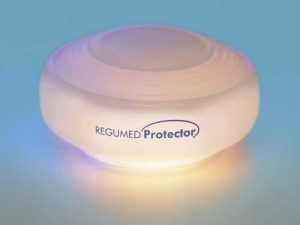
Research for Electro-smog Devices
IGEF and IIREC reports on the Regumed Protector, a device sold for protection against electromagnetic fields from Wi-Fi, mobile phones and DECT handsets. Biophysical testing submitted by the manufacturer. Not a bioresonance therapy study.
Read the paperClinical study on the use of BICOM resonance therapy on overstrain syndrome in top sportsmen
Papcz and Barovic, translated and adapted by Rome and Moyses for Regumed. Two groups of top athletes with overstrain syndrome, one treated conventionally and one with BICOM resonance therapy, compared on pain rating, treatment period and number of sessions. Reports a difference favouring the BICOM group.
Read the paperProspective randomised study to check the results of treatment using endogenous electromagnetic fields, in the case of slight liver cell damage
A prospective randomised study, translated from the German, of patients with slight liver cell damage: one group treated with endogenous electromagnetic fields through a BICOM device, one control, with liver enzymes (GOT, GPT, gamma GT) compared. Published in the Regumed compendium.
Read the paperAre there evidence-based studies on the efficacy of bioresonance therapy?
Hans Brügemann, head of the Institute for Regulative Medicine, Gräfelfing. A congress talk on what level of evidence means and which BICOM studies reach which level, drawing on the Rahlfs appraisal. The manufacturer's own account of its evidence base.
Read the paperScientific studies of BICOM Resonance Therapy
An overview of the nine studies the Institute for Regulative Medicine published as Wissenschaftliche Studien zur BICOM Resonanz-Therapie: the Schumacher allergy series, the Chinese asthma and skin series, the liver cell trial, the sportsmen study and others, with each result as the Institute reported it.
Read the paperIndependent reviews and regulatory positions
Systematic reviews, professional position papers and regulator statements from bodies with no commercial link to bioresonance. Several conclude that the published evidence does not yet meet the standard they apply. They are included so that you can see the full picture and make up your own mind.
Bioresonance Q and A: the MHRA answers HealthSense’s questions
HealthSense UK newsletter 116, correspondence with the MHRA. Regulator statement. The MHRA says bioresonance has no defined regulatory status, that status depends on the claims made for a device, and that a CE mark is not proof of efficacy. Date not shown on the page.
Read the assessmentBioenergy treatment for improving well-being: a meta-analysis of Healy device studies (Walach and Marmann, 2023)
Walach and Marmann (2023), Complementary Medicine Research. Meta-analysis of eight studies of the Healy frequency device. Reports a pooled effect of g=0.76 on well-being. All eight studies were run by the manufacturer. An adjacent frequency device, not bioresonance in the BICOM or MORA sense.
Read the assessmentIssues surrounding consumer-bought food allergy testing in the UK (Wong and colleagues, 2022)
Wong, White, Plant, Shipman and Shipman (2022), Clinical and Experimental Dermatology. Survey of 24 UK direct-to-consumer food allergy test providers, 22 contacted. Finds most use bioresonance or IgG methods in unaccredited laboratories and calls the results misleading.
Read the assessmentComplementary and alternative medicine and atopic eczema (Schäfer, 2017)
Schäfer (2017), Allergologie Select. Narrative review of complementary approaches in atopic eczema. Notes that the single bioresonance trial reviewed showed no superiority over sham treatment.
Read the assessmentAtopic dermatitis: interdisciplinary recommendations, part II (Polish societies, 2020)
Nowicki and colleagues for the Polish dermatology, allergy, paediatric and family medicine societies (2020), Postepy Dermatologii i Alergologii. Clinical guideline. States that bioresonance is not recommended in atopic dermatitis.
Read the assessmentUnproven diagnostic tests for adverse reactions to foods (Kelso, 2018)
Kelso (2018), Journal of Allergy and Clinical Immunology: In Practice. Review. Classes electrodermal (Vega-type) testing among unproven tests for adverse reactions to foods.
Read the assessmentASCIA position paper: evidence-based versus non evidence-based allergy tests and treatments (2025)
Australasian Society of Clinical Immunology and Allergy (2025). Professional position statement. Lists bioresonance as a variant of Vega testing, unable to separate allergic from healthy subjects, and advises against its use for allergy diagnosis.
Read the assessmentUK advertising rules on bioresonance therapy: CAP advice, updated January 2026
Committee of Advertising Practice, updated 6 January 2026. Regulatory guidance. States that CAP has seen no evidence that bioresonance devices diagnose, prevent or treat disease, and cites four upheld ASA rulings: Life Principles (2015), Y and M Holistic Clinic (2018), Wayne Hardwick (2019), Anthony Grant (2021).
Read the assessmentBioscan and similar devices: Cochrane Austria’s assessment of bioresonance diagnosis (2025)
Kerschner for Medizin transparent, Cochrane Austria (September 2025). Evidence assessment of diagnostic scanning devices such as Bioscan. Concludes it found no valid evidence for diagnosis by these devices, citing the Dorsch and Kolt validity test and a 2022 German court case involving Bioscan distributors.
Read the assessmentThe Leberkäse test: a validity check of bioresonance diagnostic devices (Dorsch and Kolt, 2019)
Dorsch and Kolt (2019), Allergo Journal. Experimental validity test of two diagnostic scanning devices, Bioscan and Vieva, run on volunteers, a cadaver, a meat loaf and a wet cloth. Reports that the devices produced similar readouts for living people and inanimate objects. Concerns diagnostic scanners rather than BICOM or MORA therapy systems.
Read the assessmentSystematic review of complementary and alternative veterinary medicine: miscellaneous therapies
Bergh and colleagues (2021), Animals. Systematic review covering cats, dogs and horses, 982 records screened. Bioresonance was one of fifteen therapies for which no study met the inclusion criteria. In plain terms: no veterinary bioresonance study of usable quality was found.
Read the assessmentExperience from clinical practice
Reports by practitioners on their own patients, most of them presented at the annual BICOM congress. They are observations from practice rather than controlled studies, and they have not been independently reviewed. They are here because they show what practitioners see day to day, with that context stated so you can weigh them accordingly.
Biophysical allergy therapy, Retrospective study from a medical practice
Schumacher, Innsbruck, 1989 to 1990. A retrospective questionnaire study of around 200 allergy patients from one medical practice, sent out five months after treatment ended. Reports 83 per cent of treated allergies concluded successfully by the patients' own account. Practitioner's own caseload, no control group.
Read the reportRelated fields: pulsed electromagnetic field and magnetotherapy research
A separate reference list of 92 PubMed-indexed papers on pulsed electromagnetic fields, magnetic field therapy and transcranial magnetic stimulation, grouped by condition: bone and fracture healing, osteoarthritis, nerve regeneration, wound healing, pain and migraine, and more. These are different device classes from bioresonance and are not evidence for or against it; they are collected because readers ask about them and because the physics overlaps.