
Allergies / Asthma / Bronchitis / ENT, Intolerances & Digestive Health
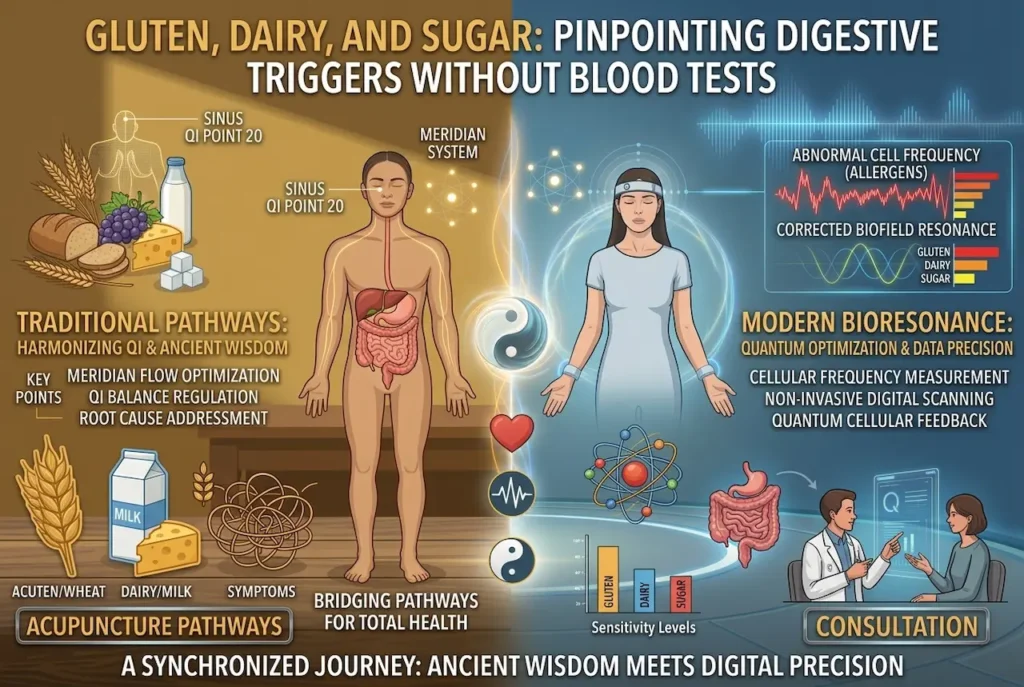
Pinpointing Digestive Triggers Without Blood Tests
Sep
The Hidden Culprits: Gluten, dairy, and sugar are the most common instigators of chronic gut distress, often manifesting as bloating, fatigue, and unpredictable bowel habits.
The Blood Test Barrier: Standard clinical blood tests primarily detect IgE-mediated acute allergies or specific celiac markers, frequently missing non-celiac sensitivities and functional enzymatic intolerances.
A Gentle Path Forward: Bio Resonance Therapy offers a completely non-invasive, radiation-free, and needle-less alternative to analyze the body’s natural energetic frequencies and highlight potential biological stressors.
Restoring Equilibrium: By avoiding painful blood draws, individuals can cross-reference subtle physiological responses to lifestyle triggers, clearing a transparent path toward personalized dietary adjustments and optimal gut wellness.
The Silent Conversation in Your Gut
Every single day, your body is talking to you.
Sometimes it whispers through a slight dip in your afternoon energy. Other times, it screams through painful bloating, sudden cramps, or a frantic run to the bathroom.
If you are like millions of others, you have likely pointed a finger at the usual suspects: gluten, dairy, or sugar.
But guessing isn’t a strategy. It’s an exhausting cycle of restriction and frustration.
You want answers, but the thought of sitting in a sterile clinic, waiting for a needle to pierce your skin for a battery of blood tests, feels overwhelming.
What if the answer isn’t found in your blood, but in your biological frequencies?
Let’s talk about how we can decode your digestive triggers without a single drop of blood.
Why the Big Three Disrupt Your System
Your gut is an incredibly sophisticated ecosystem. When you introduce complex proteins or highly processed sugars, the system can easily lose its balance.
Understanding why gluten, dairy, and sugar act as common triggers is the first step toward reclaiming your daily comfort.
The Complexity of Gluten
Gluten is a structural protein composite found in wheat, rye, and barley. In modern food production, gluten is frequently modified to increase elasticity, making it highly resilient against natural digestive enzymes.
When your body struggles to break down these dense protein chains, it can experience localized inflammation within the intestinal lining, leading to systemic sluggishness and discomfort.
The Challenge of Lactose and Casein
Dairy sensitivities usually fall into two categories: an inability to digest the sugar (lactose) or an immune reaction to the proteins (casein and whey).
As we age, our bodies naturally produce less lactase, the enzyme required to split lactose into simple sugars. When undigested lactose reaches the large intestine, it ferments rapidly, producing excess gas and sudden fluid shifts.
The Inflammatory Cascade of Sugar
Refined sugar and high-fructose corn syrup alter the delicate microbial balance of your microbiome.
Excessive sugar intake feeds opportunistic yeast and harmful bacteria strains, causing them to multiply rapidly. This microbial imbalance produces metabolic byproducts that irritate the gut wall, leading to regular bloating and variable bowel habits.
The Limits of Conventional Blood Testing
When you ask a traditional practitioner for help, the default response is almost always a blood draw. While blood tests are invaluable for acute medical conditions, they have distinct limitations when it comes to everyday functional food intolerances.
Standard blood tests are primarily designed to look for IgE antibodies the markers responsible for immediate, severe allergic reactions like anaphylaxis.
They are also highly effective at identifying specific autoimmune markers, such as those found in celiac disease.
However, a standard allergy panel will completely miss a non-celiac gluten sensitivity, a functional lactose deficiency, or a metabolic sugar intolerance.
This leaves thousands of individuals with “perfectly normal” lab results, yet they continue to feel absolutely miserable after every meal.
A Non-Invasive Path: The Lactose Intolerance Alternative Test
If needles and incomplete data leave you feeling stuck, it’s time to shift your perspective. Your body is more than just chemistry; it is also a system of energy and physics.
Bio Resonance Therapy introduces a gentle, non-invasive approach that serves as a highly effective lactose intolerance alternative test. Instead of checking for chemical antibody counts in your bloodstream, this method looks at how your body communicates on a cellular level.
Every cellular structure, tissue, and organic substance emits a highly specific electromagnetic frequency. When your system is healthy and balanced, these energetic wavelengths remain stable.
When a problematic substance like lactose or gluten is introduced into your biofield, it creates a distinct frequency disruption.
By utilizing professional bioresonance scanning technology, practitioners can comfortably assess these energetic shifts.
It requires no blood draws, no pain, and no stressful waiting periods, giving you a comprehensive window into your bioresonance gut health profile.
How Bio Resonance Therapy Maps Your Sensitivities
Stepping into a holistic wellness journey shouldn’t feel like entering a sterile hospital wing. The process of mapping your digestive triggers through biophysics is designed to be entirely transparent, relaxing, and supportive.
- Painless Signal Detection: Highly sensitive electrodes or brass hand cylinders are gently placed in contact with your skin to read the subtle energetic outputs of your cells.
- Frequency Comparison: The specialized bioresonance software cross-references your baseline frequencies against the unique digital signatures of common stressors, including dairy proteins, wheat fractions, and various sugars.
- Imbalance Identification: Areas where your natural biological frequencies experience friction or destabilization point directly to potential systemic stressors and functional sensitivities.
- Gentle Regulatory Support: Once these specific energetic stressors are noted, the device can emit complementary, inverted frequencies to assist the body in returning to its natural state of homeostatic balance.
Transforming Your Bioresonance Gut Health
True wellness is never about living a life of permanent, stressful restriction. It is about understanding what your body needs to thrive so you can make informed, mindful choices.
By prioritizing your bioresonance gut health, you move away from generic, one-size-fits-all dietary trends. You gain a highly personalized map of your current physiological stressors.
If the scanning process reveals a strong energetic stress reaction to dairy or sugar, you can strategically reduce those specific elements from your lifestyle for a set period, allowing your intestinal lining to rest and recover.
This targeted approach prevents you from needlessly eliminating entire food groups that your body is perfectly capable of handling, preserving your nutritional variety and your peace of mind.
Reclaiming Your Daily Comfort
You do not have to accept chronic bloating, brain fog, or digestive unpredictability as your normal way of living. Your body wants to be in balance, and it is constantly giving you the clues necessary to get there.
Taking control of your wellness doesn’t require painful interventions or clinical anxiety. Through the gentle, physics-backed insights of Bio Resonance Therapy, you can cut through the dietary noise and pinpoint exactly what is holding your digestion back.
Listen to what your body is trying to tell you. Look beyond traditional blood chemistry, embrace a deeper understanding of your cellular health, and take your first comfortable step toward a lighter, more vibrant version of yourself.
If you are ready to stop guessing and start listening to your body’s unique energetic signals, explore our holistic scanning options and book your non-invasive consultation today.
Frequently Asked Questions
Q1 Can bioresonance replace a medical test for celiac disease?
No. Bio Resonance Therapy evaluates the body’s subtle energetic frequencies and functional stressors; it does not diagnose medical conditions like celiac disease. If you suspect an autoimmune disease, always consult with a qualified physician for clinical diagnostic testing.
Q2 How long does a typical bioresonance scanning session take?
A standard, comprehensive bioresonance assessment generally takes between 45 to 60 minutes. The entire process is completely painless, non-invasive, and allows you to sit comfortably while the specialized equipment analyzes your system’s frequencies.
Q3 What should I do to prepare for a functional sensitivity scan?
To ensure the most accurate reading of your natural energetic fields, it is highly recommended to stay exceptionally well-hydrated by drinking plenty of pure water in the 24 hours leading up to your session. Avoid heavy caffeine or alcohol intake right before your appointment.
Q4 Is Bio Resonance Therapy safe for children and sensitive individuals?
Yes, absolutely. Because the technology relies entirely on reading and emitting ultra-low, gentle electromagnetic frequencies without utilizing radiation, needles, or chemicals, it is perfectly safe and stress-free for individuals of all ages, including young children.
Q5 How quickly will I notice improvements in my digestion?
Many individuals report noticing a positive shift in their overall comfort and energy levels within three to four weeks of implementing their personalized lifestyle adjustments and complementary balancing sessions. Every individual’s natural healing timeline is unique.

